Cobo Sawyer
Cobo Sawyer is one of the two people behind Cobo Makes Games, the indie studio making Mytheria, a pixel-art co-op adventure for one to four players. This is where Cobo writes about how we build the game: game feel, pixel art, game design and co-op, with real clips from Mytheria.
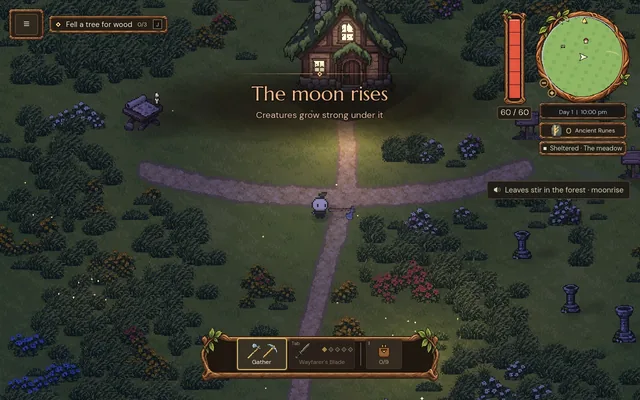 Game UI design · 23 October 2026Accessibility settings in games: every option we built and whyWhich accessibility settings should a game have? Every option in Mytheria, from sound captions to hold to confirm, what each does, and a demo to try.
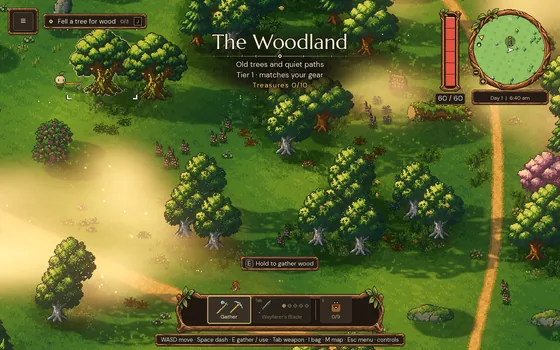 Indie game development · 15 October 2026How we decide what to polish firstHow we choose Mytheria's polish work: rank every gap by what a player notices at play size, write down what success looks like, compare matched frames.
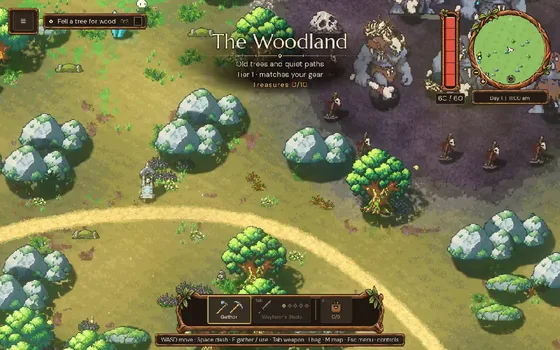 Game design · 14 October 2026Monster camps and danger zones in an open worldHow Mytheria places enemies in its open world: camps that fight as a group and come back at dawn, wanderers on roads, and danger zones you can't cheese.
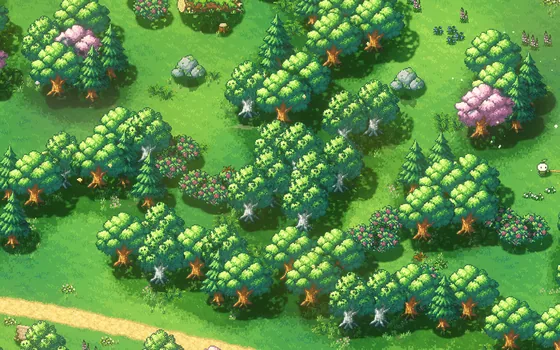 Game design · 14 October 2026The island reshuffles every day: keeping a map freshHow Mytheria moves its trees, rocks and creature dens a little every dawn, while roads, landmarks and home stay put, so the map stays fresh but familiar.
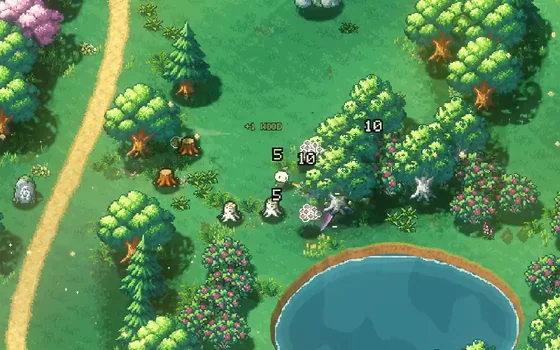 Game audio · 14 October 2026A pickup sound you can hear a thousand timesHow Mytheria's pickup sound stays pleasant: eleven real recordings in a shuffle bag, a tight start, and a short cooldown so a big haul never rattles.
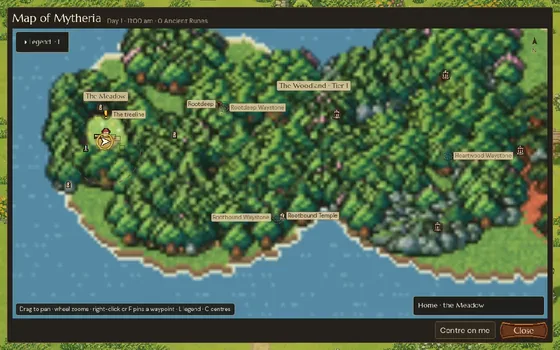 Indie game development · 14 October 2026What one co-op playtest changed in our gameOne two-player playtest of Mytheria, the notes it produced, how we sorted them, and the changes they led to, from loot pickup to the world map.
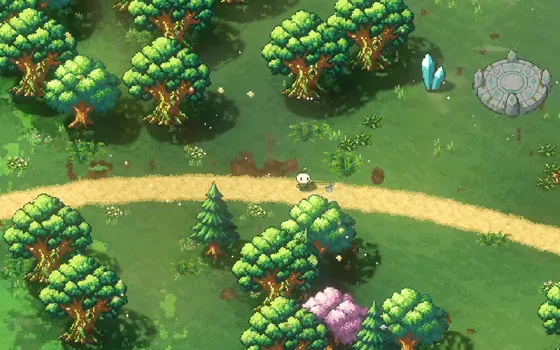 Game design · 13 October 2026How to make a game world bigger without making it emptyHow Mytheria's island grew five times wider without feeling empty: named places, huge landmarks, roads, and something to find every few seconds.
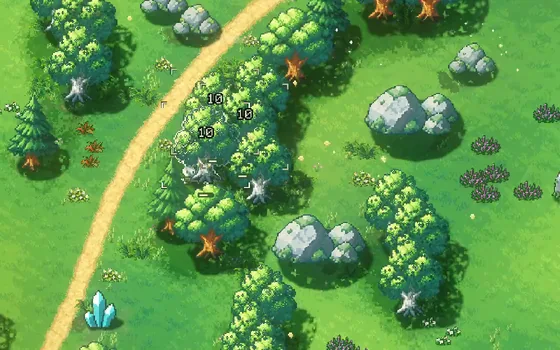 Game feel · 13 October 2026Forgiving aim: gathering that finds what you meantHow Mytheria's gathering aim forgives: a pointer bigger than it looks, a pick for the nearest thing ahead, and swings that hit everything in their arc.
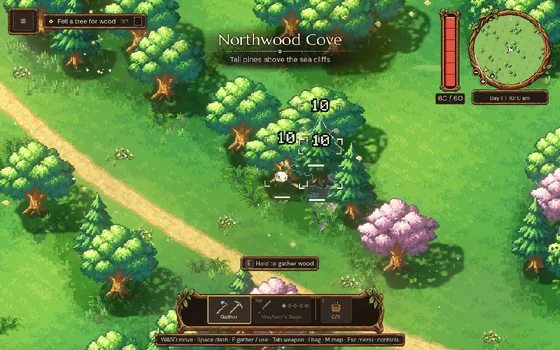 Game feel · 13 October 2026Loot drops that feel good to pick upHow Mytheria's loot drops work: a real arc and one bounce, a pale outline to stand out, a magnet that pulls them in, and text that adds up the haul.
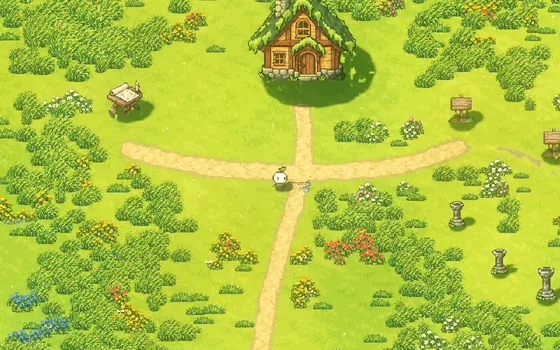 Game audio · 13 October 2026Game music that leaves room for silenceHow Mytheria's game music works: quiet gaps between tracks, a program for each area, music that ducks under a fight, and boss music that takes over.
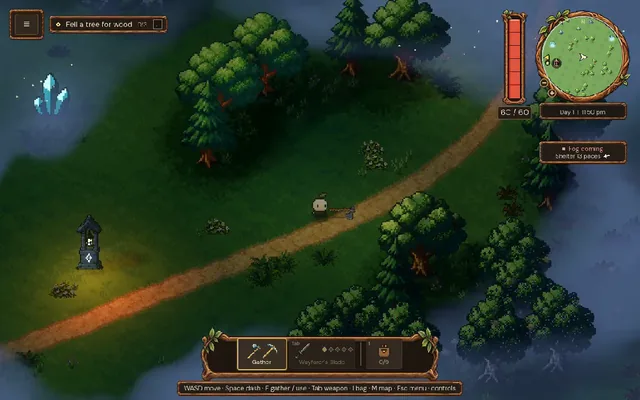 Game design · 12 October 2026Night and fog: designing danger that comes and goesHow Mytheria's nights work: a moon that makes creatures fierce, a fog that arrives once a night after a warning, and shelters that make it a choice.
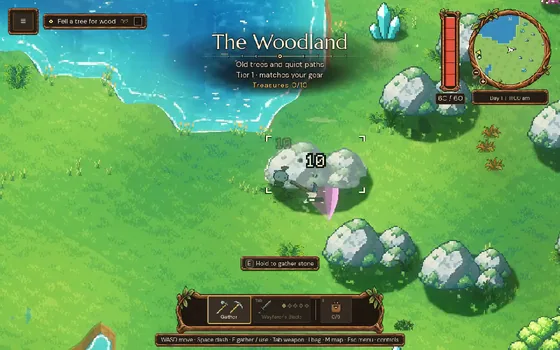 Game feel · 12 October 2026How to make a rock break feel satisfyingHow Mytheria makes breaking a rock feel good, frame by frame: a dust puff, a shadow that shrinks away, a tidy rubble pile and text that never overlaps.
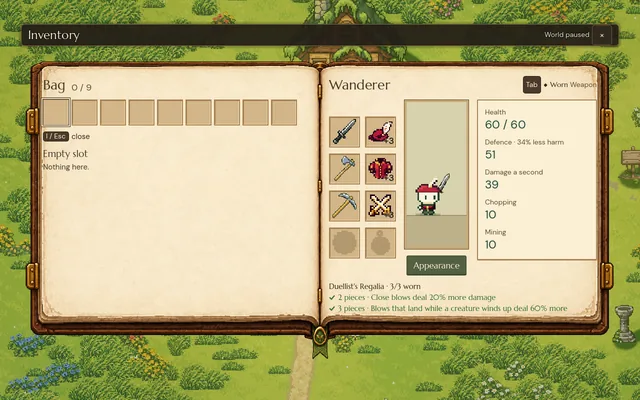 Game design · 12 October 2026Armor sets and upgrades that stay useful all gameHow Mytheria designs armor sets: one defence curve for every set, nine set bonuses to choose between, and honing that keeps a favourite set useful.
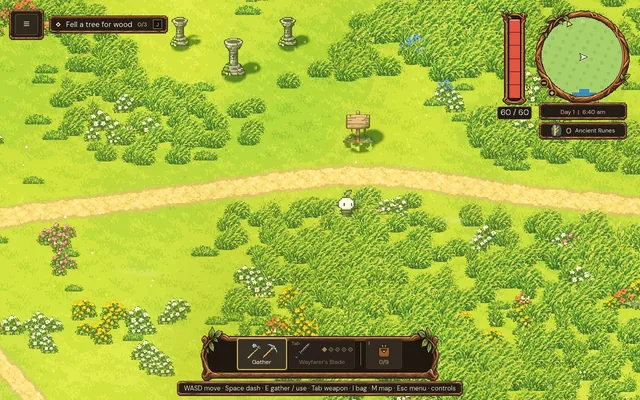 Game feel · 12 October 2026Top-down camera: smooth follow without motion sicknessHow Mytheria's top-down camera follows the player: centred, no look-ahead, a smooth chase that's the same at any frame rate, plus zoom and smoothing.
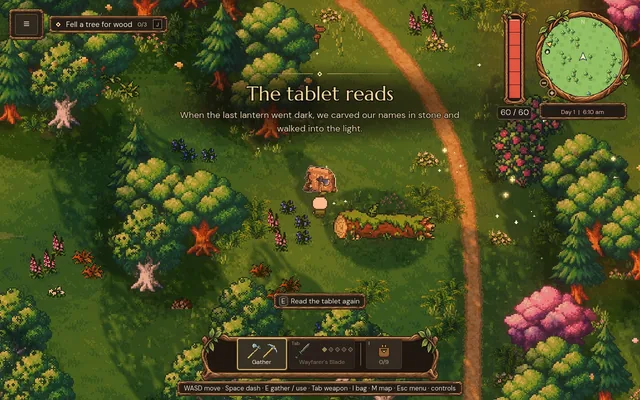 Game design · 11 October 2026How to tell a story without cutscenesHow Mytheria tells its story with no cutscenes: one-line rune tablets in the world, place names, keepers' memories and dawn lines, found in any order.
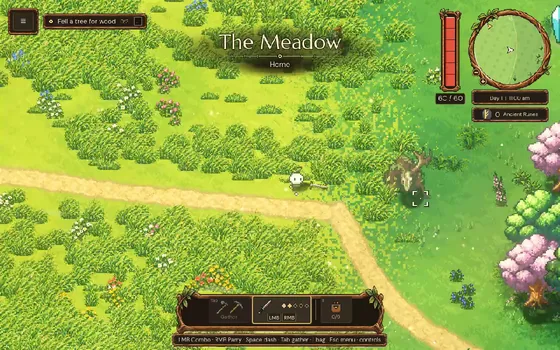 Game feel · 11 October 2026Damage numbers in games: why whole numbers read betterHow Mytheria draws floating damage numbers: whole numbers, one number that ticks up per target, colours by who's hurt, and lanes so hits never overlap.
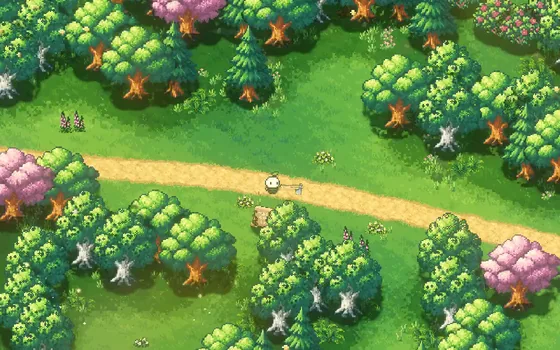 Game art · 11 October 2026Sprites in a lit world: making pixel art stand on the groundHow Mytheria's flat pixel-art sprites cast real shadows in Godot: invisible shapes built from the art, a height that matches the camera, and soft contact.
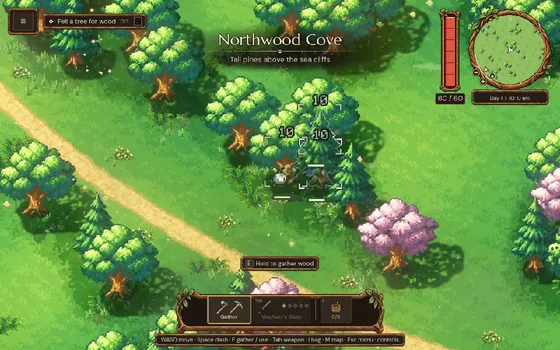 Game design · 11 October 2026Quest design: always give the player a next objectiveHow Mytheria's journal works: one objective on screen at a time, steps that complete from what you already did, search rings instead of exact pins.
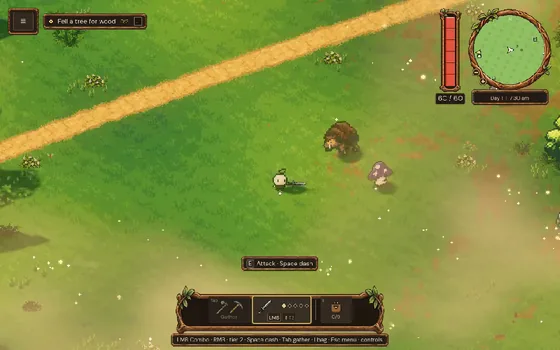 Game audio · 10 October 2026Game sound effects: why sound is half of a good hitHow Mytheria layers its game sound effects: a hit is four or five sounds triggered by the fight itself. Hear one real fight with and without the layers.
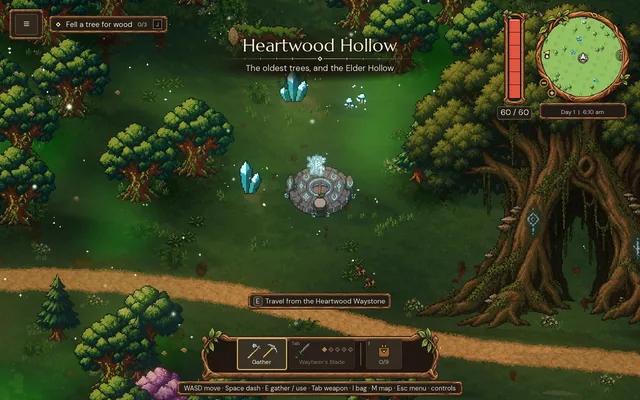 Game design · 10 October 2026Fast travel design: waystones that respect the mapHow Mytheria's fast travel works: 17 waystones where you'd go anyway, unlocked by visiting, priced by distance, and a channel that a single hit breaks.
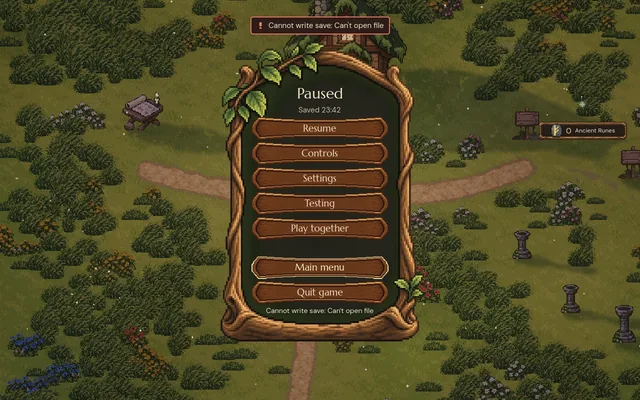 Game programming · 10 October 2026How to make saves that survive a crashHow Mytheria's Godot save system survives crashes: write to a temp file then swap, rotating backups, autosave off the main thread, no silent quits.
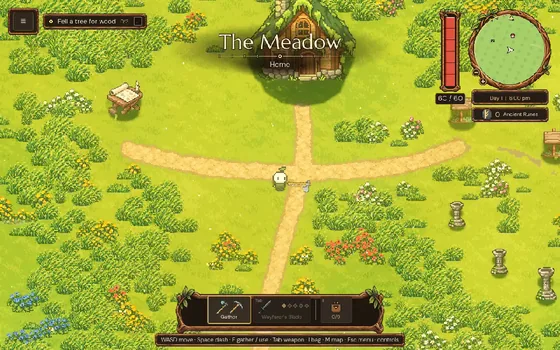 Game UI design · 10 October 2026Pause menu design: six ways to build one, comparedSix ways to build a game pause menu, from a plain panel to a painted scene, what each costs, and why Mytheria uses one painted wooden plate over the world.
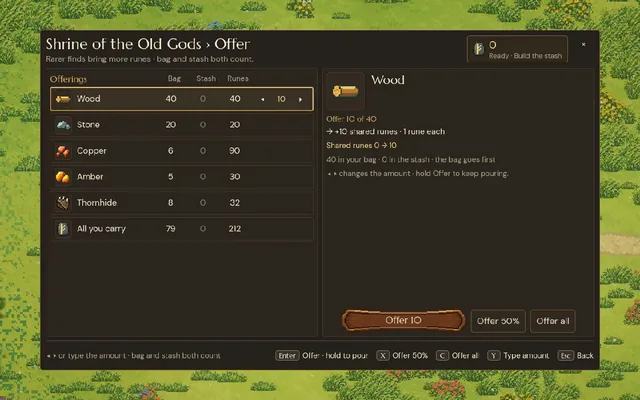 Game design · 9 October 2026Game economy design: setting prices with a curveHow we balance Mytheria's game economy: target curves for enemies and income, a model that sets every price, and play tests that check the model.
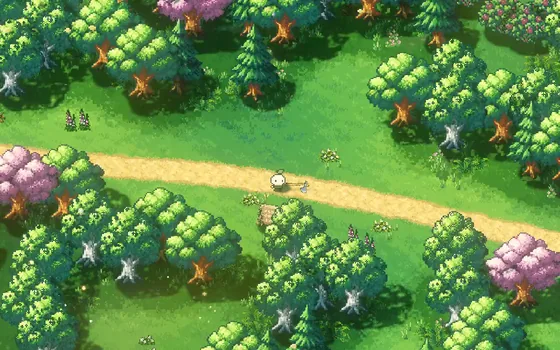 Game art · 9 October 2026Pixel art grass and paths that don't look tiledHow Mytheria draws top-down pixel art grass and paths without visible tiles: a repeating cluster tile, slow waves that pick the shade, and curved roads.
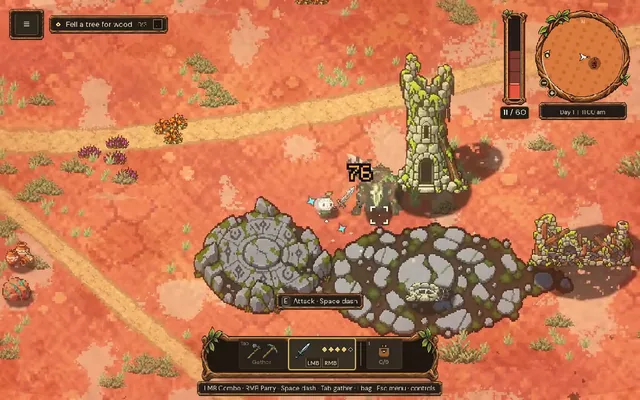 Game design · 9 October 2026Health regeneration vs health pickups: why we chose orbsRegenerating health or health pickups? Why Mytheria heals with orbs from defeated creatures and rest in the light, with real numbers and a demo to try.
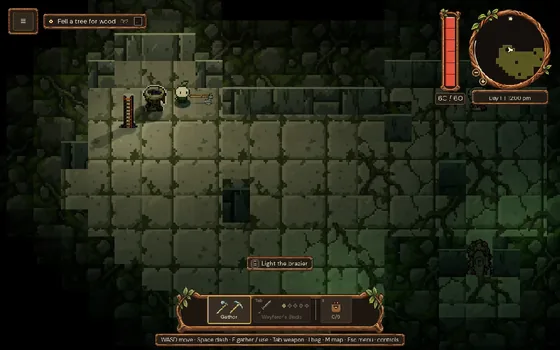 Game design · 9 October 2026Dungeon design: ten floors, small puzzles and a boss at the bottomHow we design Mytheria's temple dungeons: ten hand-made floors, three tiny puzzle rules, a rest stop halfway, rising danger and a boss at the bottom.
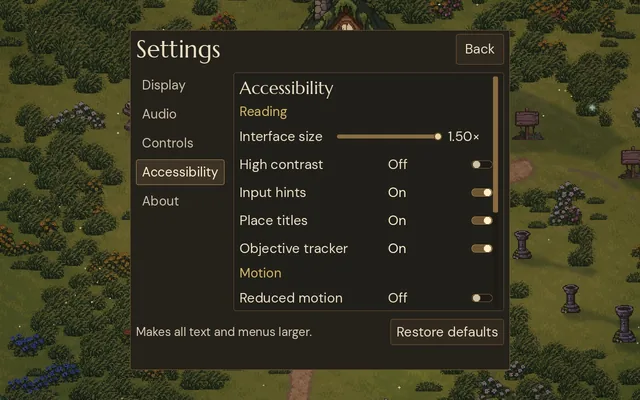 Game UI design · 8 October 2026Game UI readability: text sizes that work on every screenHow big should game UI text be? Valve's Steam Deck minimum, Mytheria's measured font sizes on every screen, and an interface size setting that reflows.
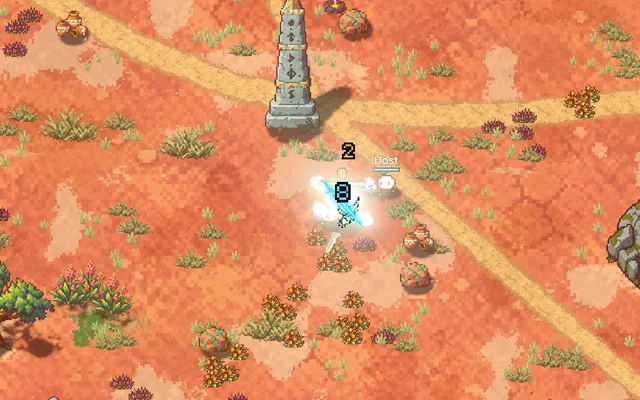 Multiplayer and co-op · 8 October 2026How to hide lag in an online co-op gameHow Mytheria hides lag in online co-op: a buffer that follows the connection, inputs sent twice, hits judged by what you saw, and tests on fake bad Wi-Fi.
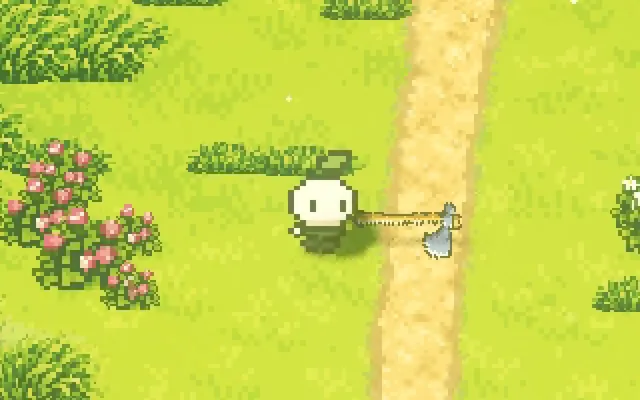 Game art · 8 October 2026Idle animation, frame by frame: what makes a character feel aliveHow Mytheria's pixel art idle animation works, frame by frame: a two-pose head bob held in whole pixels, a slow fidget, a blink, and nothing else moving.
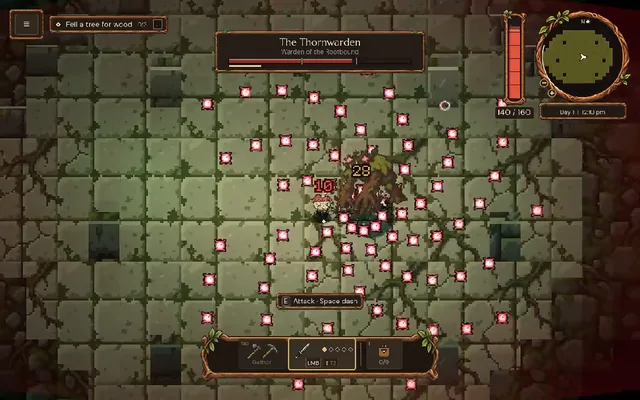 Game design · 8 October 2026Boss fight design: five bosses and what each one testsHow we design Mytheria's boss fights: a sealed door, an intro, three phases with a breather between, patterns that test something new and a real fall.
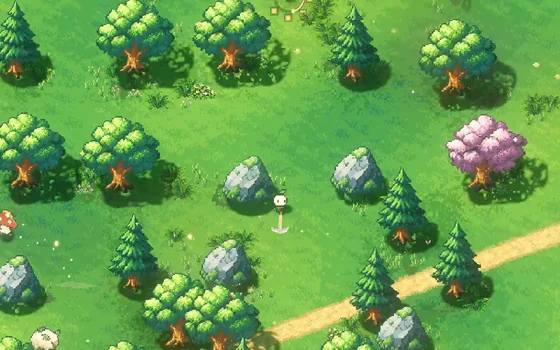 Game programming · 7 October 2026Godot performance: how we found a stutter with a frame traceHow we found a stutter in our Godot game: record the time between frames, find what ran in the slow ones, fix that one thing, and measure again.
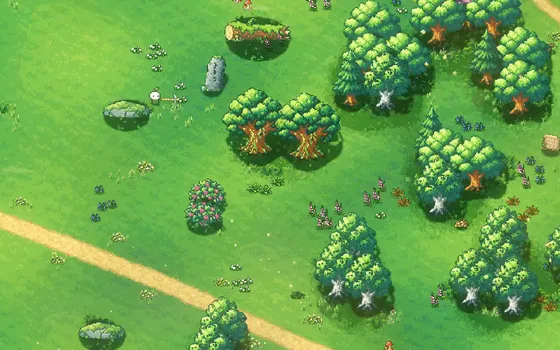 Game design · 7 October 2026How to place trees and rocks so a map looks naturalHow Mytheria places its trees and rocks: drifts instead of random scatter, habitats with rules, clear roads and a world that gets richer away from home.
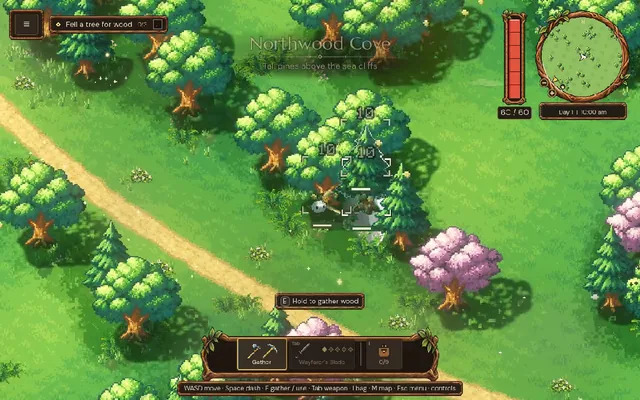 Game design · 7 October 2026Game loop design: gather by day, survive the nightMytheria's core gameplay loop as a real example: a daily loop of gathering and night danger inside a region loop of settlements, upgrades and bosses.
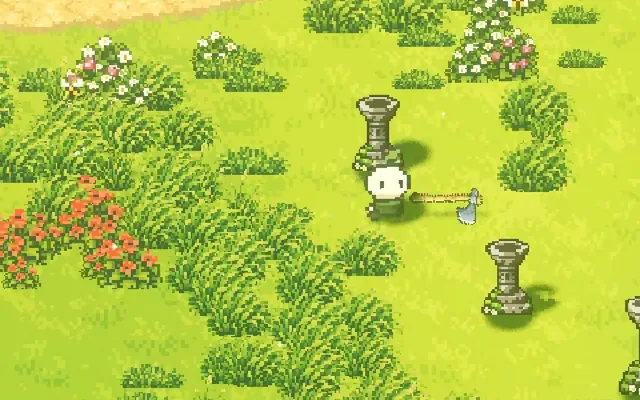 Game art · 7 October 2026One rig, five characters: modular pixel art animationHow Mytheria animates five pixel art characters with one rig: parts as data, shared clips, feet that plant on the ground and hands that hold any tool.
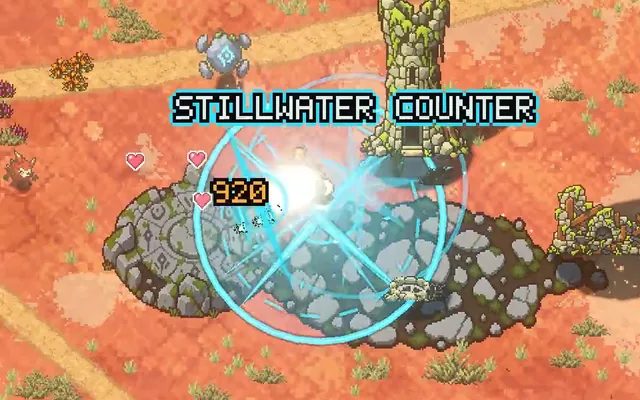 Game design · 6 October 2026How to balance weapons with a damage budgetHow we balance Mytheria's nine weapons: a damage budget per tier, every move costed in seconds of budget, with all 108 combinations measured in play.
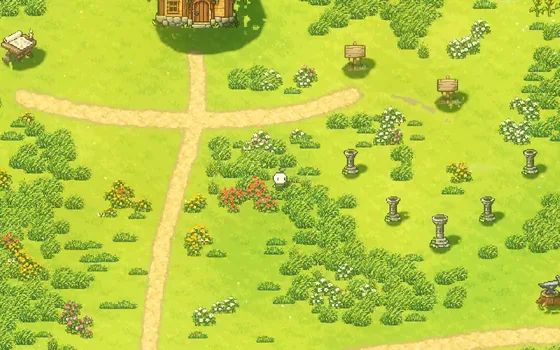 Game art · 6 October 2026Pixel art character size: why we made our characters smallerWhy Mytheria's pixel art characters got smaller: compact heads, no limbs, floating hands and tiny feet. A real before and after, with the sprite sizes.
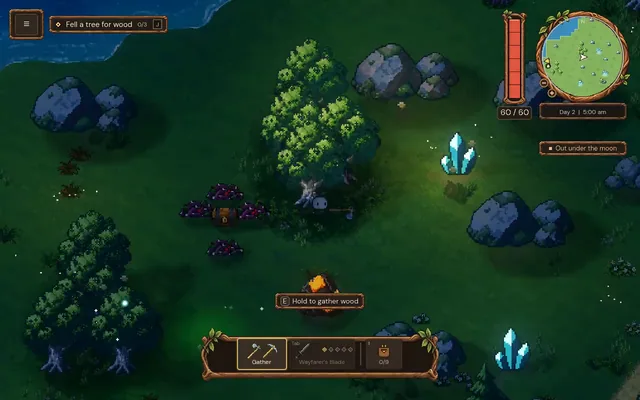 Game UI design · 6 October 2026Game HUD design: a compass and a clock in oneHow the HUD in Mytheria puts map, time and day in one corner: a clock that fills around the compass, and a readout that shifts colour with the hour.
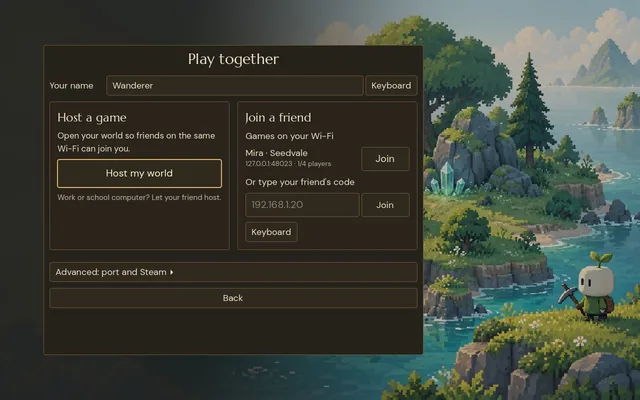 Multiplayer and co-op · 6 October 2026LAN multiplayer in Godot: finding a friend's game on any Wi-FiHow Mytheria finds a friend's game on the same Wi-Fi in Godot: a UDP beacon, broadcasts for every network size, and join errors that say what to do.
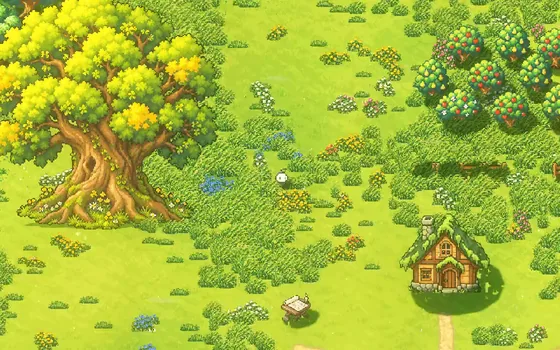 Game art · 5 October 2026How to make a pixel art forest feel aliveHow Mytheria's pixel art forest moves: one wind for the whole world, a different stiffness per plant, whole-pixel sway, grass that parts and wildlife.
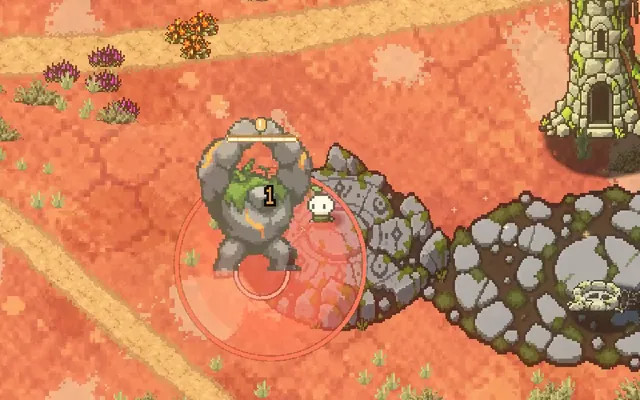 Game feel · 5 October 2026How to make big enemies feel heavy in combatHow Mytheria makes big enemies feel heavy: mass from size, blows that bounce you back, no flinching, and a stagger you earn. Try the weight split yourself.
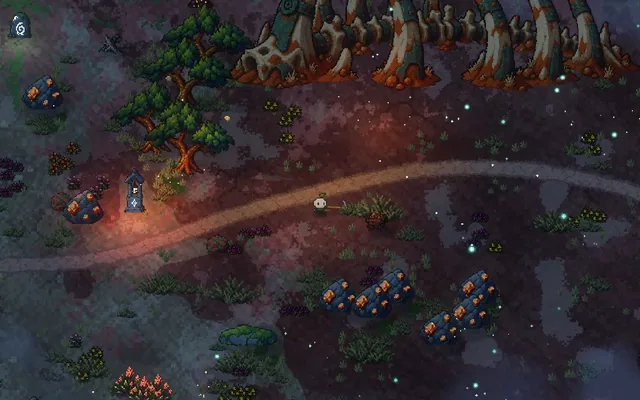 Game art · 5 October 2026How to make fog look good in a pixel art gameHow we draw fog in Mytheria: in the world, never on the screen, with a clear pocket around the player and shelters that cut holes in it. Real footage.
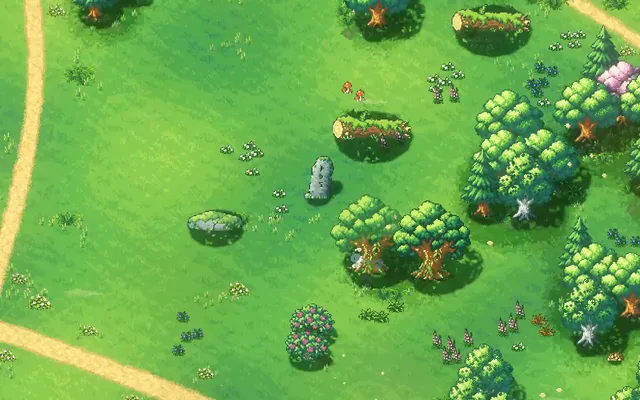 Game art · 5 October 2026Pixel art color palette: how we fixed a washed-out forestHow we pick colours for Mytheria's pixel art: hue-shifted ramps, cool shade, warm earth and coloured outlines. Explore our real tree and rock palettes.
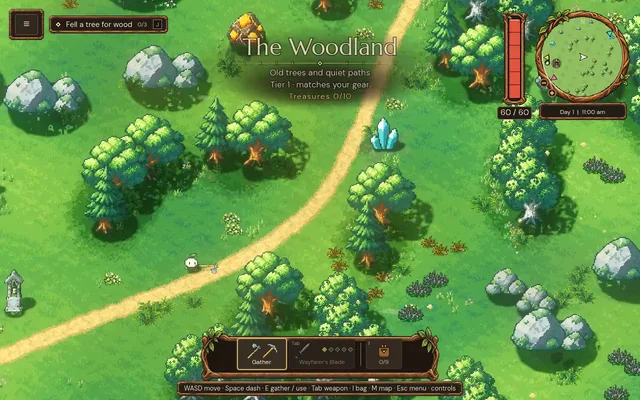 Game UI design · 4 October 2026Minimap design: show only what helps the playerHow we designed Mytheria's minimap: a calm round window, icons that keep their size, arrows on the rim, and six zoom steps. Real footage from the game.
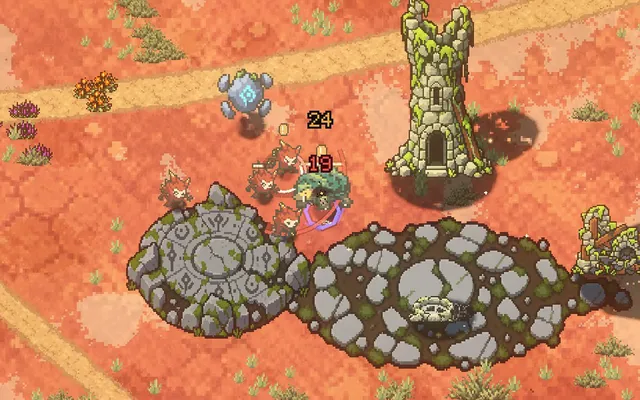 Game design · 4 October 2026How to design weapons that each feel differentHow we designed Mytheria's nine weapons around one verb each, from a harpoon that pulls to runes you set off later. See every weapon in play.
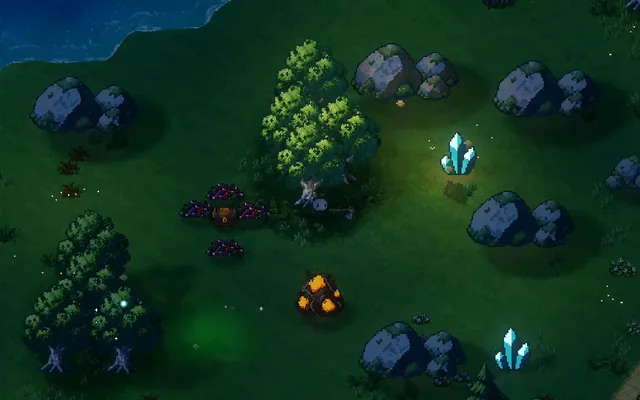 Game design · 4 October 2026Day and night cycle in games: designing every hour of the dayHow Mytheria's day and night cycle works: a 12-minute day, a dangerous moonlit night, a fog that comes once a night, and a dawn every player shares.
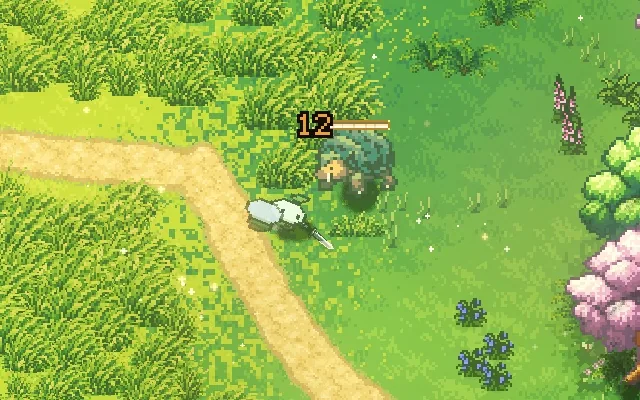 Game feel · 4 October 2026How to make a dash feel good: charges, cooldowns and animationHow the dash in Mytheria works: speed, distance, cooldown, charges, invincibility frames and the animation. Try the charges yourself, with real numbers.
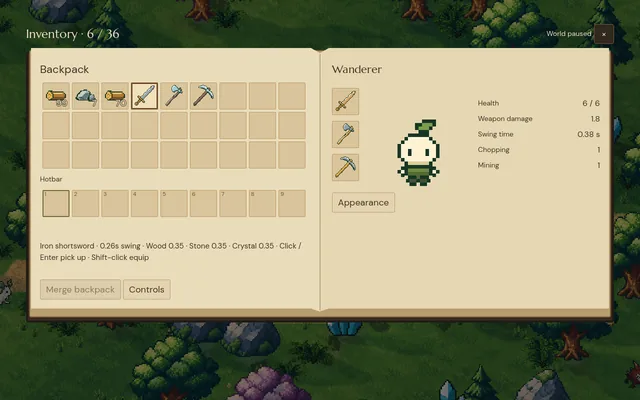 Game UI design · 3 October 2026Game inventory UI design: five versions and what each one taught usMytheria's inventory went through five designs, from a flat paper book to a live character on a stage. Step through each one and see what we changed.
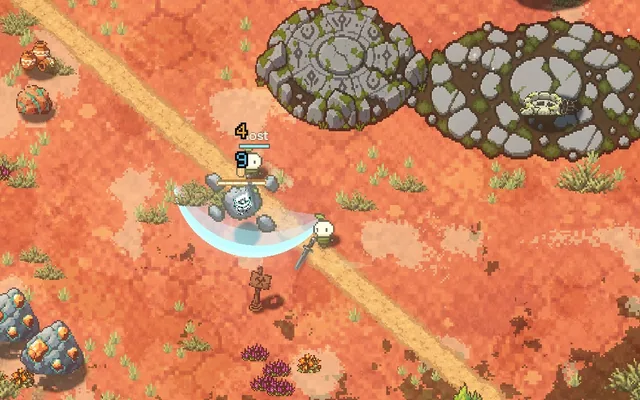 Multiplayer and co-op · 3 October 2026How co-op multiplayer works in Godot: host, prediction and lagHow Mytheria's online co-op works in Godot: one host owns the world, guests send inputs and predict their own moves. Try the lag demo, see real numbers.
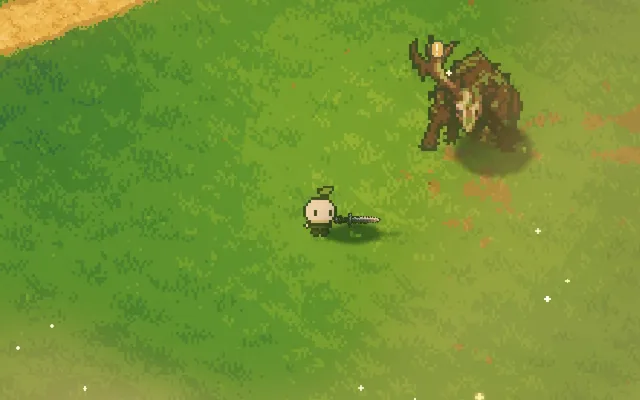 Game feel · 3 October 2026Telegraphing attacks: how to warn players before a hitA telegraphed attack warns you where and when it will land. How Mytheria telegraphs every attack: a shape on the ground, a clock, more time for big hits.
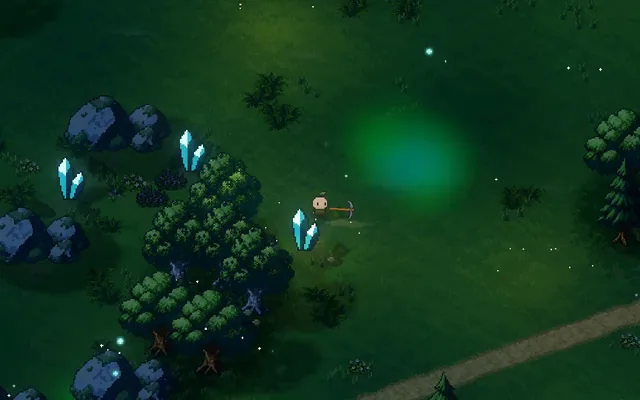 Game art · 3 October 2026Pixel art lighting in Godot: real lights in the worldHow we light Mytheria's pixel art in Godot with real lights, local mist and time of day instead of screen filters. Drag the sun through a whole day.
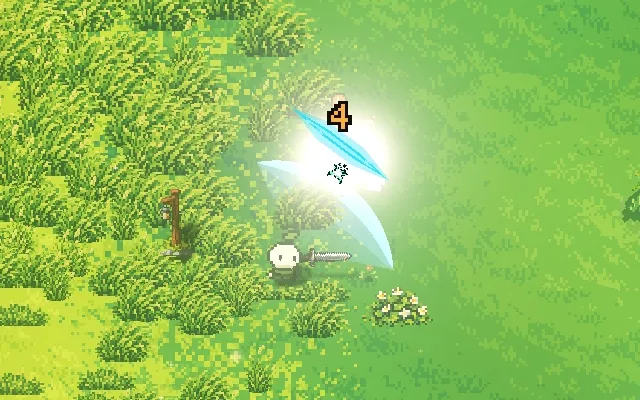 Game feel · 2 October 2026Screen shake in games: how to make it feel goodHow we tuned screen shake in Mytheria: small, along the hit, inside the hitstop and easy to turn off. Try the old and new shake curves yourself.
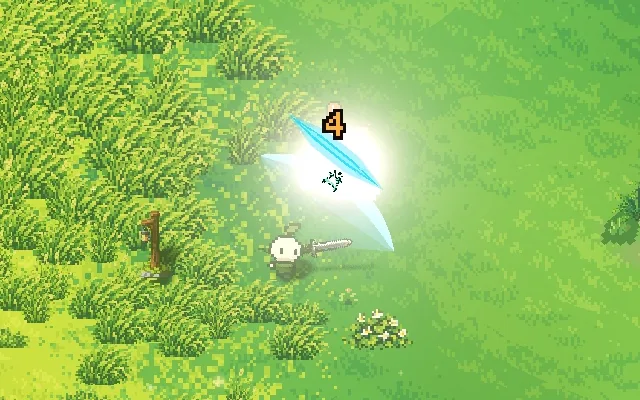 Game feel · 2 October 2026How to make combat feel goodHow we made combat feel good in our indie game Mytheria: hitstop, hit flash, knockback and screen shake, with real frame data you can try yourself.