Game loop design: gather by day, survive the night
Mytheria's core gameplay loop as a real example: a daily loop of gathering and night danger inside a region loop of settlements, upgrades and bosses.
On this page
The core loop is what a player does over and over, and the reason they want to do it once more. When it works, players keep playing "one more day" at midnight, and when it doesn't, every system you add feels like a chore. This is the loop of Mytheria, our pixel-art co-op game, and the rules we use to keep it working.
Every picture below is from the game, filmed for this post.
What is a core gameplay loop?
A core gameplay loop is the short cycle of actions a player repeats: something to do, and a reward that gives a reason to do it again. Most games have loops inside loops, from a few seconds of action up to a long arc that ties many sessions together.
The short answer
Mytheria has two loops, one inside the other:
- In the day loop you gather and explore by day, decide whether to risk the night, and wake up together at dawn.
- In the region loop you enter a new region underpowered, gather its materials and restore its settlement, then forge better gear, beat its boss and open the next region.
- Every step feeds the next: what you gather builds the settlement, and the settlement's workshop makes the gear you need for the boss.
- Every new system replaces an old one instead of adding on top.
- A journal keeps your current goal on screen (see quest design).
The day loop: gather by day, survive the night
A whole day takes 12 real minutes. The day is for gathering, building and exploring. At 22:00 the moon rises and every creature on the surface gets ten times stronger, so you choose between heading home, working underground in a mine, or taking the risk. Once a night a fog rolls in and you need shelter. The same shelters are where wounds heal; health doesn't come back on its own out in the wild (why we chose health orbs). At dawn every player's screen goes to sleep together, the world grows back, and a new day starts.
That rhythm splits a play session into days, and "one more day" becomes a real unit of play. We wrote about it in detail in our day and night cycle.
The region loop: five steps per region
The bigger loop carries you across the island's five regions. Step through it:
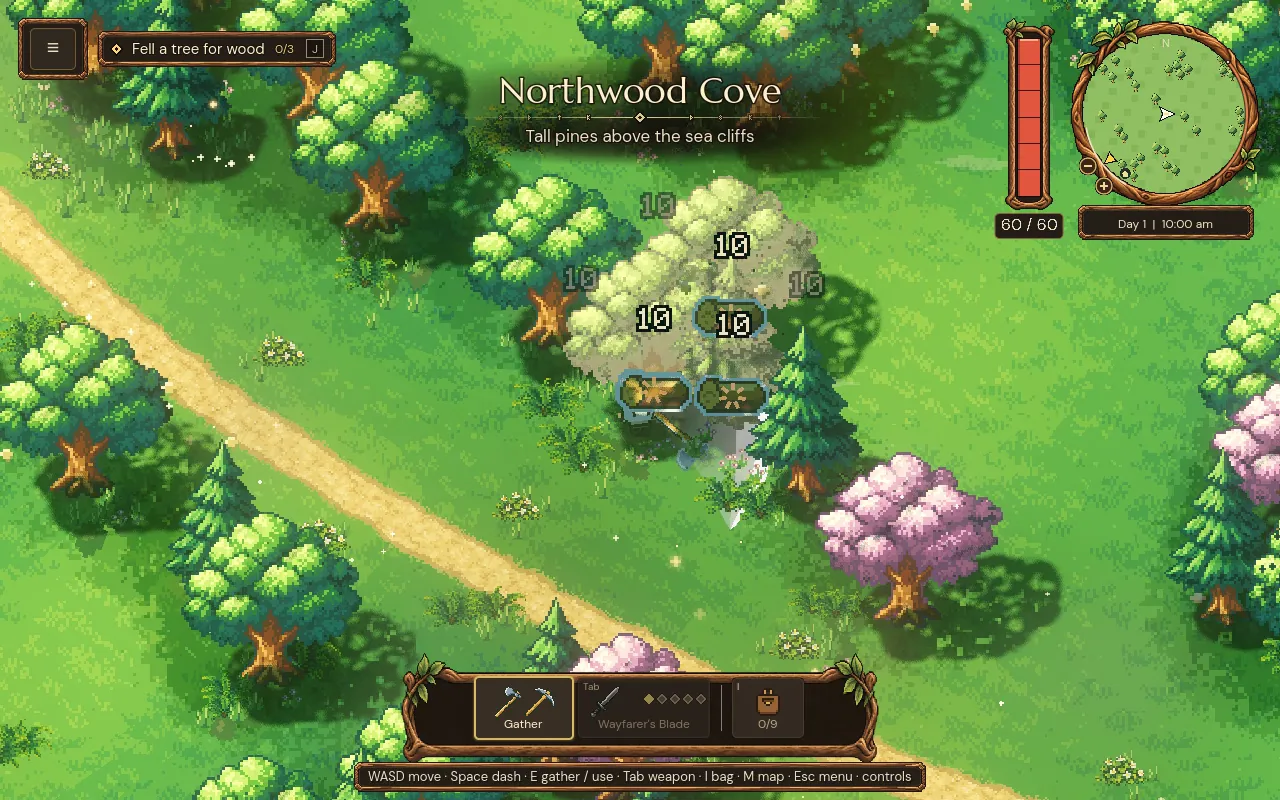
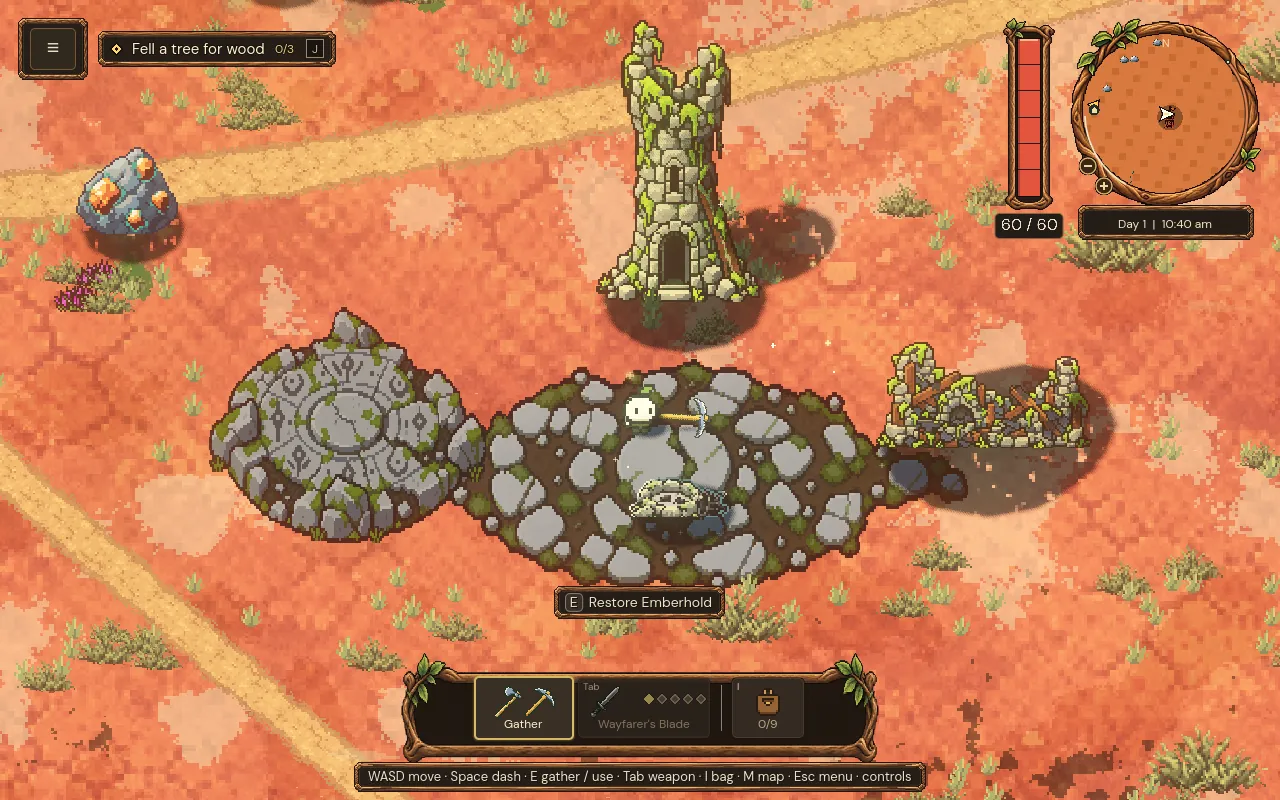
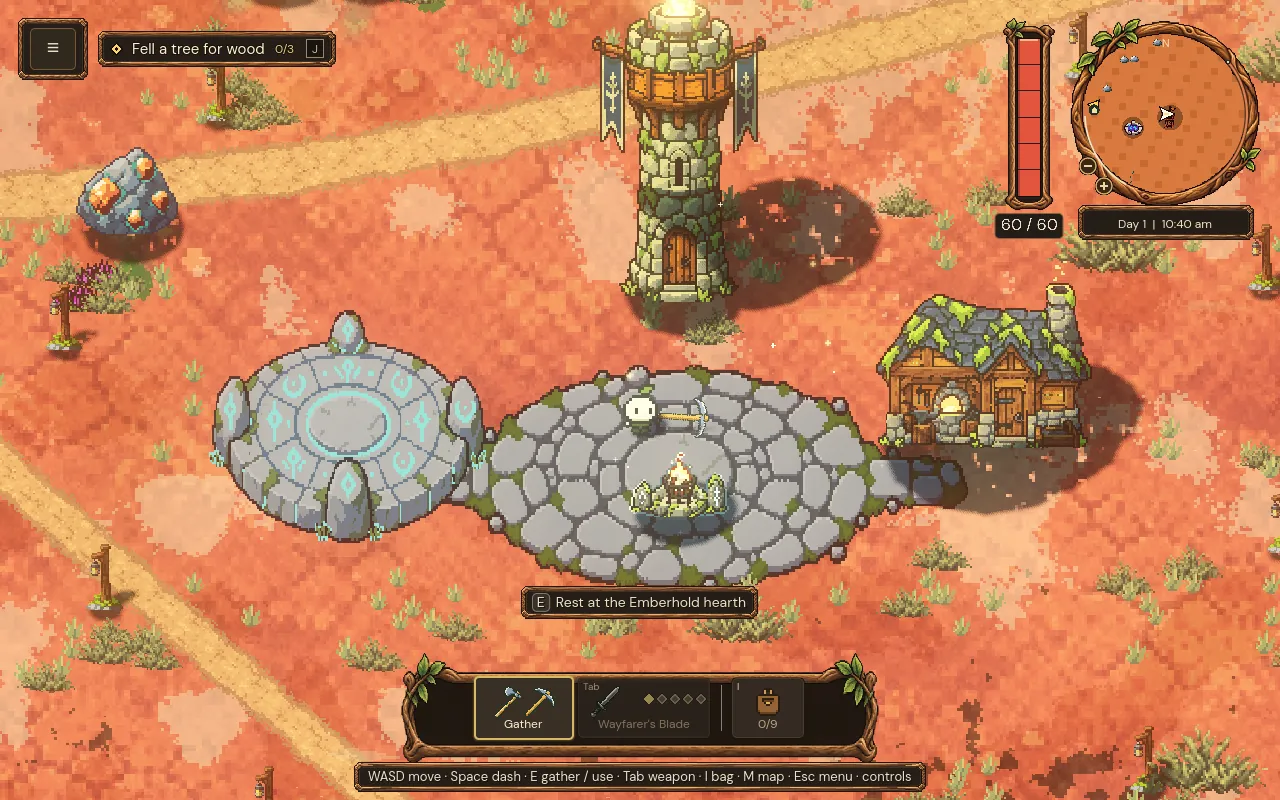
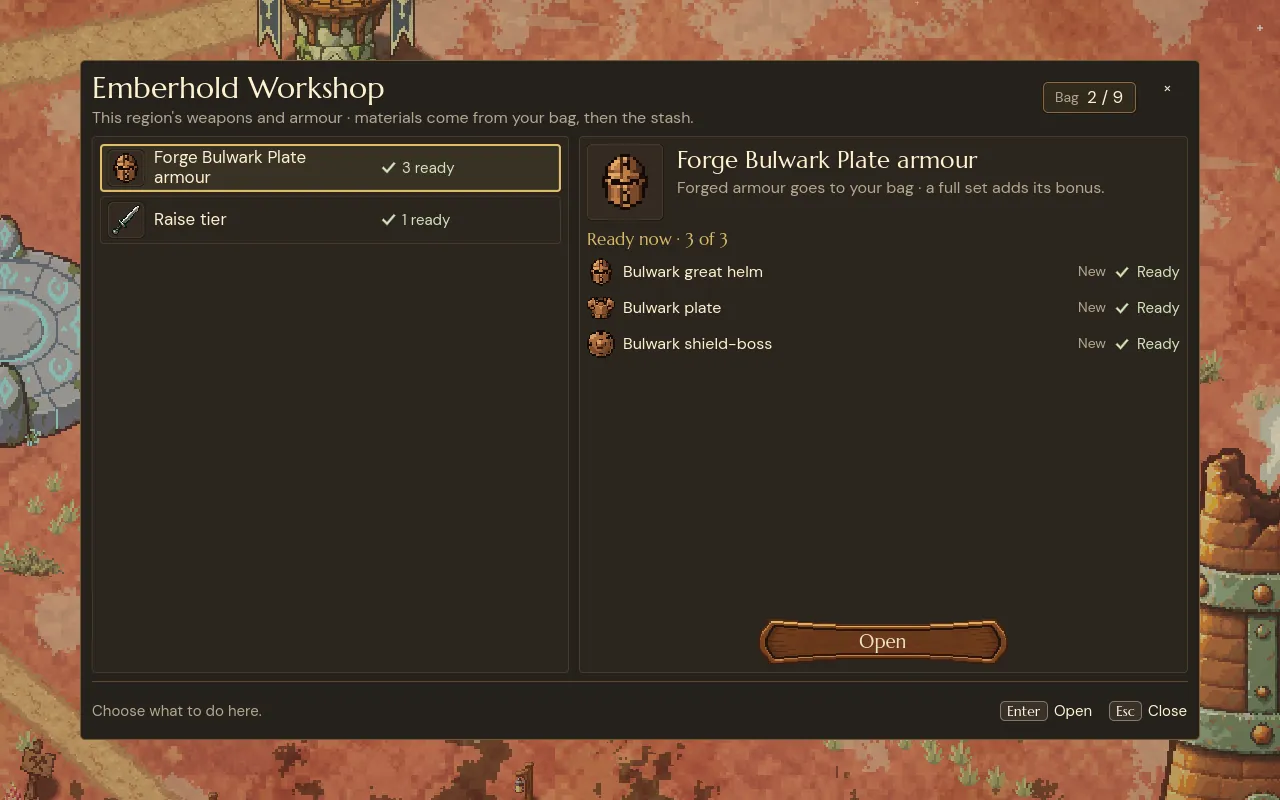
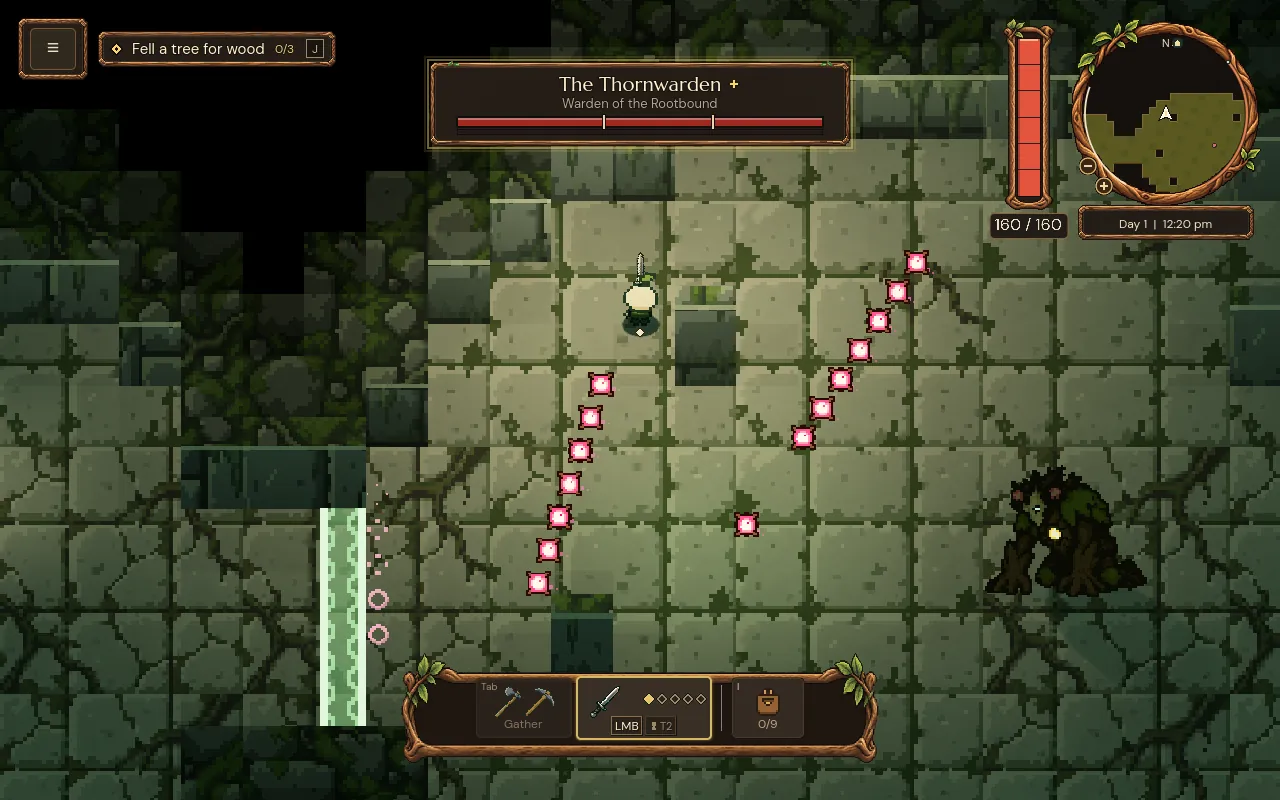
Step through one region's loop, or use the arrow keys
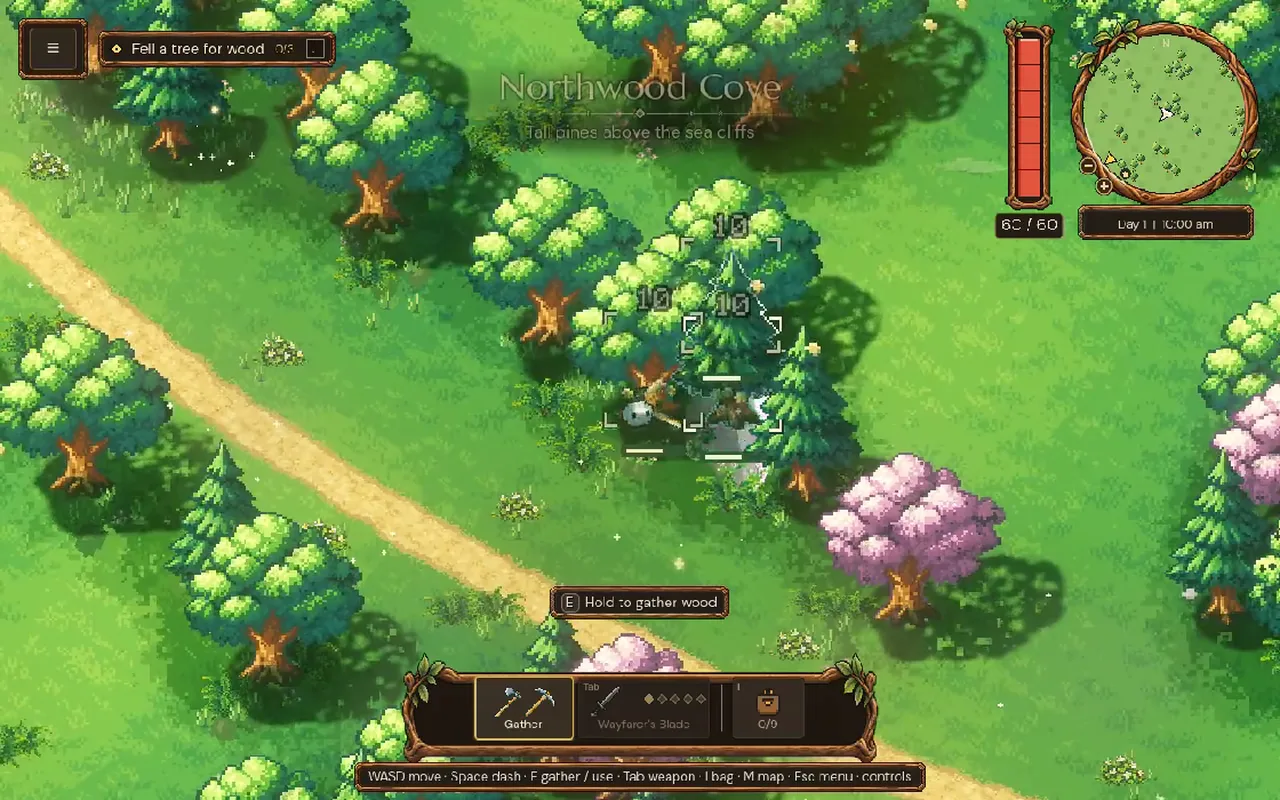
1. Gather and hunt. Each region has its own materials, from its trees, rocks and ores and from the creatures that live there. Hunting is part of gathering, because creatures drop what your gear needs.
Make every step feed the next
We test any loop by asking whether each step creates the need for the next one. In Mytheria, gathering fills your bag with a region's materials, and the settlement needs those materials. Once restored, the settlement gives you a workshop, which turns more materials into the gear that lets you survive the boss. The boss and the charting table then open a region where your gear is weak again. How much each step costs, so no region turns into a grind, is set by a model; see game economy design.
When a step doesn't feed anything, it becomes optional, and optional steps get skipped.
Start every region underpowered
Each region is about three times harder than the last, and your gear scales to match. Walking into a new region, you're stretched, and going back to an old one, you feel almost godlike. We think that swing is a big part of the fun, and it only works if the numbers are planned, which is why we balance weapons against a budget.
Give the loop real sinks
A loop needs somewhere for its rewards to go. If materials pile up with nothing to spend them on, gathering stops mattering. Settlements, gear tiers and the charting table are Mytheria's big sinks, and they're meant to take time. You pick favourite spots to farm, and some days are mostly gathering, which we prefer to a day of twenty small tasks.
Keep the rules few
Every time we add a system, we ask what it replaces. The night fog replaced a fixed nightly deadline and stopped taking items, and weapons went from eleven near-duplicates to nine that each do something different. The fewer rules a player has to hold in their head, the more attention they have for the loop itself.
Make the loop shared in co-op
In co-op, world progress is shared: the stash, the settlements, the discoveries and the opened regions belong to the world. Each character keeps their own bag, gear and blessings. Creatures drop loot for each player, so playing together doesn't slow anyone's progress, and the dawn is one shared moment for everyone.
Getting to that door takes nine floors of guardians and small puzzles first; how those floors are built is in dungeon design.
A checklist for game loop design
- Nest a short loop inside a long one.
- Make every step create the need for the next.
- Start each new chapter underpowered, and let old ones feel easy.
- Give rewards real sinks.
- Add systems only by replacing others.
- In co-op, share world progress and keep personal rewards personal.
Further reading
- Day and night cycle in games: designing every hour of the dayHow Mytheria's day and night cycle works: a 12-minute day, a dangerous moonlit night, a fog that comes once a night, and a dawn every player shares.
- How to balance weapons with a damage budgetHow we balance Mytheria's nine weapons: a damage budget per tier, every move costed in seconds of budget, with all 108 combinations measured in play.
- MytheriaPlay the loop yourself: a pixel-art co-op adventure for one to four players.
Wishlist Mytheria
Mytheria is a pixel-art co-op adventure for one to four players, coming to Steam for Windows, macOS and Steam Deck. A wishlist is the best way to follow it and to help us.