Health regeneration vs health pickups: why we chose orbs
Regenerating health or health pickups? Why Mytheria heals with orbs from defeated creatures and rest in the light, with real numbers and a demo to try.
On this page
Where health comes back from shapes how a game plays. If it refills on its own, every fight is a fresh start, and if it only comes back from pickups, every wound makes you decide whether to push on or turn back. In Mytheria, our pixel-art co-op game, health doesn't regenerate out in the wild. It comes from heart orbs that defeated creatures drop, and from resting in the light.
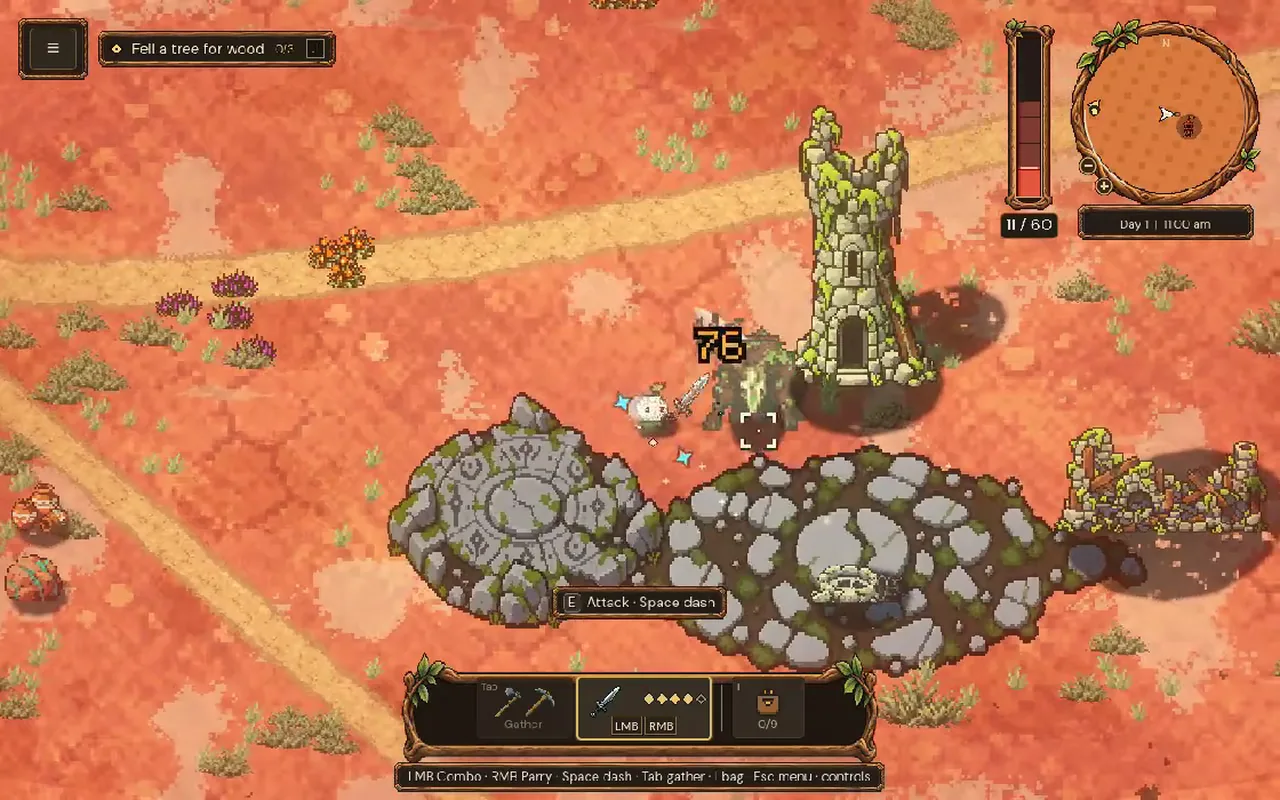
Every clip below was filmed in the game for this post.
Is regenerating health or health pickups better?
It depends on the game. Regenerating health suits games built around one intense fight at a time, where you can take risks because waiting a few seconds resets you. Health pickups suit games about journeys and resources, because damage carries over and how you fight now matters later. We mix the two, with pickups out in the danger and healing in safe places.
The short answer
How health works in Mytheria:
- Waiting out in the wild doesn't heal you.
- Defeated creatures may drop a heart orb, and tougher creatures drop one more often.
- An orb heals about one typical blow of the region it drops in.
- Orbs only go to players who are hurt, and at full health they wait on the ground.
- The meadow, lit lantern shrines and restored settlements heal you steadily while you rest there.
- After a defeat you wake up at home with full health.
Heart orbs from the fight
When a creature falls, it may drop a floating heart. The chance depends on how tough it was: 20 % plus its health divided by 100, kept between 30 % and 100 %. A thornling, with 30 health, drops one half the time, a mossback, with 50, 70 % of the time, and a hollowhorn, with 100, every time, so big fights pay back more.
An orb heals one typical blow of the region it falls in: 10 in the Woodland, 19 in Copper Bloom, 39 in Glimmerfen, 71 in Frostspire and 73 in the Hollow Heart. So an orb is always worth about one hit you took, wherever you are. After the orb in the clip, health stays at 30, because nothing else heals you out there.
Don't waste orbs on players who don't need them
Orbs only drift toward players who are hurt, and at full health an orb stays on the ground where it fell. In co-op that means the friend who's hurt gets the heart, even if someone else is standing closer. Ordinary loot uses the same magnet; see loot drops that feel good to pick up.
Try both rules
This example outing has six fights, each costing some health and dropping a few orbs. Compare a rule that heals you when you're safe, after 9 seconds without being hurt, 10 health every 3 seconds, with Mytheria's orbs. Then change how long you wait between fights:
Switch the rule, then change the time between fights
With healing when safe, a short pause between fights erases the damage, and only fights close together add up. With orbs, waiting changes nothing. What you lost stays lost until you win it back, so you start weighing each fight and whether you have enough health to reach the next shrine.
Heal in the light
If wounds only piled up, players would face a long walk home after every outing. So the safe places heal you: the meadow at home, lit lantern shrines and restored settlements. Stand there, unhurt for about a second, and you regain 3.5 % of your maximum health every second, 2 a second at 60. The game tells you so: a small plate on the HUD reads "Resting" and the rate.
This fits the rest of the game. At night, a fog creeps across the island and bites anyone caught outside; the light gives back what the fog takes. We explain the day and night rhythm in game loop design. Deep underground there are smaller rest stops too: a temple's halfway waystone and a mine's ladder give back 5 health a second once you've been unhurt for 3 seconds, covered in dungeon design.
Let gear bend the rules
Once the rules are clear, gear can make exceptions to them. With two pieces of the Heartroot armour set worn, each kill restores 1 % of your health, which rewards aggressive play. The Hearthlight censer's pool of light heals friends standing inside it, which makes it a healer's weapon for co-op. Because nothing heals passively, both are worth building around.
A checklist for designing healing
- Decide first whether damage should carry over.
- If it should, heal from pickups earned by playing instead of from waiting.
- Scale pickups with danger so they keep their value.
- Send pickups to whoever needs them.
- Give safe places that heal, so recovery has a destination.
- Show healing clearly: numbers, a HUD plate, the bar moving.
- Use gear to bend the rules, once the rules are firm.
Further reading
- Game loop design: gather by day, survive the nightMytheria's core gameplay loop as a real example: a daily loop of gathering and night danger inside a region loop of settlements, upgrades and bosses.
- Dungeon design: ten floors, small puzzles and a boss at the bottomHow we design Mytheria's temple dungeons: ten hand-made floors, three tiny puzzle rules, a rest stop halfway, rising danger and a boss at the bottom.
- MytheriaFeel every wound yourself: a pixel-art co-op adventure for one to four players.
Wishlist Mytheria
Mytheria is a pixel-art co-op adventure for one to four players, coming to Steam for Windows, macOS and Steam Deck. A wishlist is the best way to follow it and to help us.