The island reshuffles every day: keeping a map fresh
How Mytheria moves its trees, rocks and creature dens a little every dawn, while roads, landmarks and home stay put, so the map stays fresh but familiar.
On this page
Once you've learned a map by heart, you stop exploring it and only follow your usual route. In a game where you come back to the same island day after day, that happens fast, and by the third morning you know where every copper rock is. In Mytheria, our pixel-art co-op game, the wild part of the island moves a little every dawn. The groves, flowers, rocks and creature dens find new spots, while the roads, the landmarks and your home stay exactly where they were.
How do you keep a game map fresh?
Split the map into what the player finds their way by and what they look for. Keep the first fixed, like roads, landmarks, home and entrances, and move the second a little each day, like resources and creature dens. Move them within their own habitat and not too far, never onto something that matters, and never right next to the player. The map stays familiar, and every day has something new to find.
The short answer
How Mytheria's daily reshuffle works:
- Every dawn the host re-rolls where trees, flowers, rocks, crystals and creature dens sit.
- A Woodland grove moves as one group, 60 to 280 units, and keeps its kind of ground.
- Roads, landmarks, the meadow and its ring of trees, entrances, stations and monster camps never move.
- Nothing lands on roads, water, players, dropped loot, entrances or landmark feet.
- Anything within 150 units of a player stays put.
- Things keep their state, so a half-chopped tree is still half chopped.
- The host can switch it off in the Old House.
Fix what players find their way by
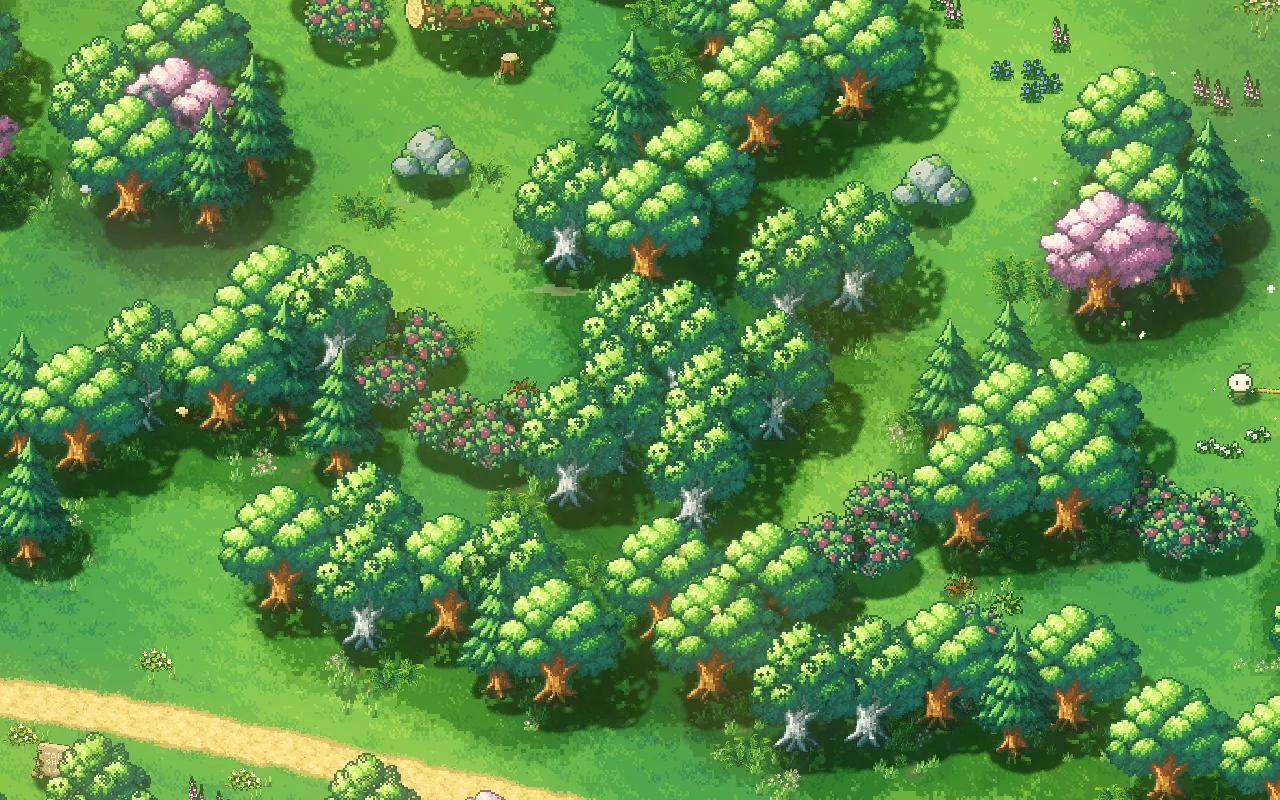
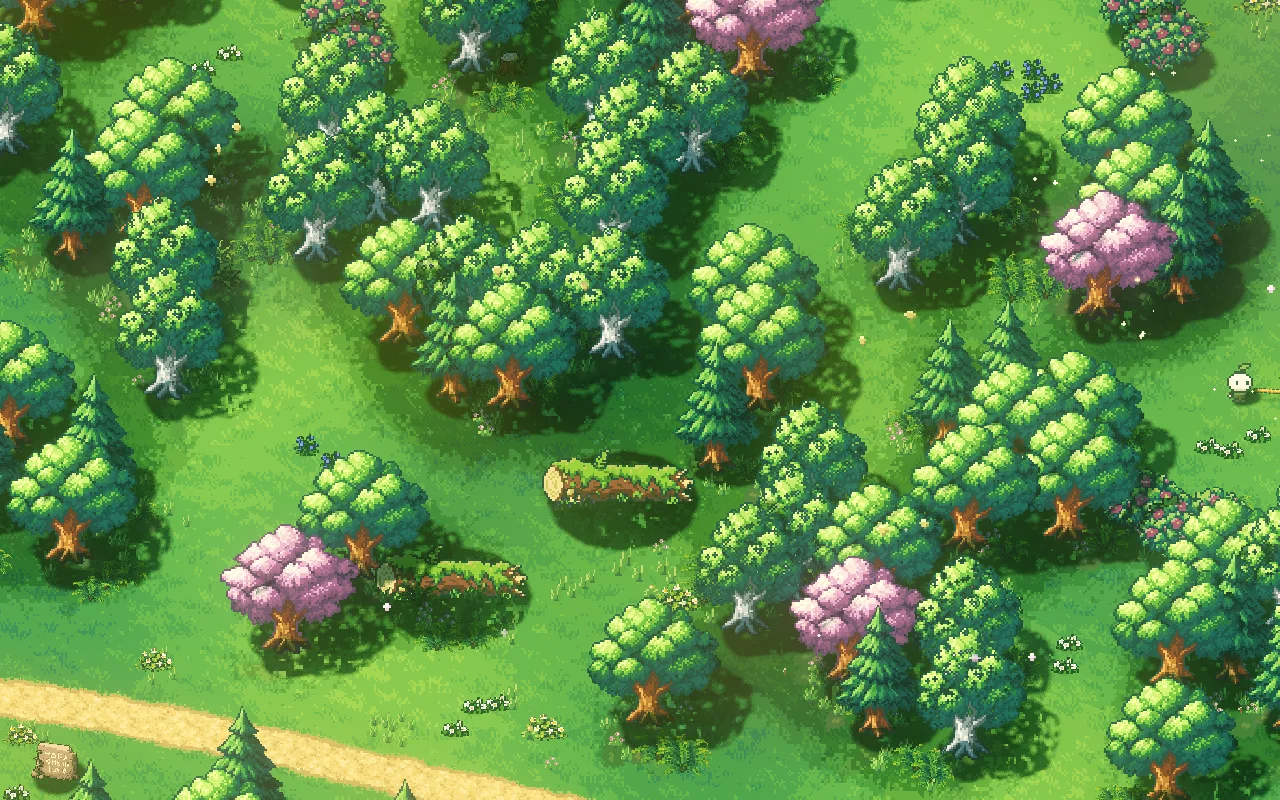
Players find their way by roads and landmarks rather than by trees. So everything with a name or a purpose never moves: roads, the huge landmarks, the meadow and the ring of trees around it, stations, mine and temple entrances, lore tablets and the monster camps. This is the same view on two days. The road and the tree beside the player stay, and the groves, flowers and logs around them have moved:
Switch between the two days, or use the arrow keys
Day 1, before any reshuffle.
Move things within their habitat
A reshuffle that dropped an oak in a meadow or a lily on a hill would break the world, so each part of the island has its own rule. In the Woodland, a grove moves as one group, 60 to 280 units from where it stood, and keeps its kind of ground: old oaks only in the dark heart of the forest, birches on the airy edge. In the other regions, each drift of plants or rocks is redrawn inside its own habitat, so lilies stay in the shallows and the frozen heights keep their own kinds. How those habitats are built in the first place is in how to place trees and rocks so a map looks natural.
Step through six real days of one part of the Woodland:
Step through the days, then show what stays
On a fresh world's first dawn, 3,292 of the island's 3,718 surface resources move, and all 95 creature dens find new spots.
Never move things next to the player
Watching a tree slide away would be eerie, and finding a rock on top of your dropped loot would be worse. The reshuffle happens at dawn, while the screen is dark, and it keeps clear of people and their things: nothing lands within 86 units of a player or 42 units of a drop, and a group with a player within 150 units doesn't move at all. Creature dens stay put if a player is within 420 units or one of their creatures is awake and hunting.
Keep identity, change only position
A tree that moves keeps its id, its health and its regrowth timer, and only its position changes. That keeps saves simple, keeps a half-chopped tree half chopped, and means nothing is lost or duplicated.
Make it the same for everyone
In co-op, every player has to see the same island. The host rolls the reshuffle and sends the result, so guests receive the new layout and never the roll itself. The roll uses the world's seed, the day and a secret number only the host has, so the host can repeat it exactly while nobody can work out tomorrow's layout in advance. Placing a larger world's landmarks and gaps is in how to make a game world bigger without making it empty.
A checklist for a daily reshuffle
- Fix everything players find their way by.
- Move the things they look for.
- Move groups together, and not too far.
- Keep everything in its own habitat.
- Never move anything onto roads, water, loot or people.
- Leave whatever is near a player alone.
- Change only positions, and keep each thing's identity.
- Roll it on the host and send the result.
- Let players switch it off.
Further reading
- How to place trees and rocks so a map looks naturalHow Mytheria places its trees and rocks: drifts instead of random scatter, habitats with rules, clear roads and a world that gets richer away from home.
- How to make a game world bigger without making it emptyHow Mytheria's island grew five times wider without feeling empty: named places, huge landmarks, roads, and something to find every few seconds.
- MytheriaWake up to a new island every day: a pixel-art co-op adventure for one to four players.
Wishlist Mytheria
Mytheria is a pixel-art co-op adventure for one to four players, coming to Steam for Windows, macOS and Steam Deck. A wishlist is the best way to follow it and to help us.