How to tell a story without cutscenes
How Mytheria tells its story with no cutscenes: one-line rune tablets in the world, place names, keepers' memories and dawn lines, found in any order.
On this page
Cutscenes stop the game to tell the story, and in a co-op game that's worse than usual, because one player watches while the other wants to keep playing. In Mytheria, our pixel-art co-op game, the story never stops play. It lives in the world, in short lines you find in any order while you're doing something else.
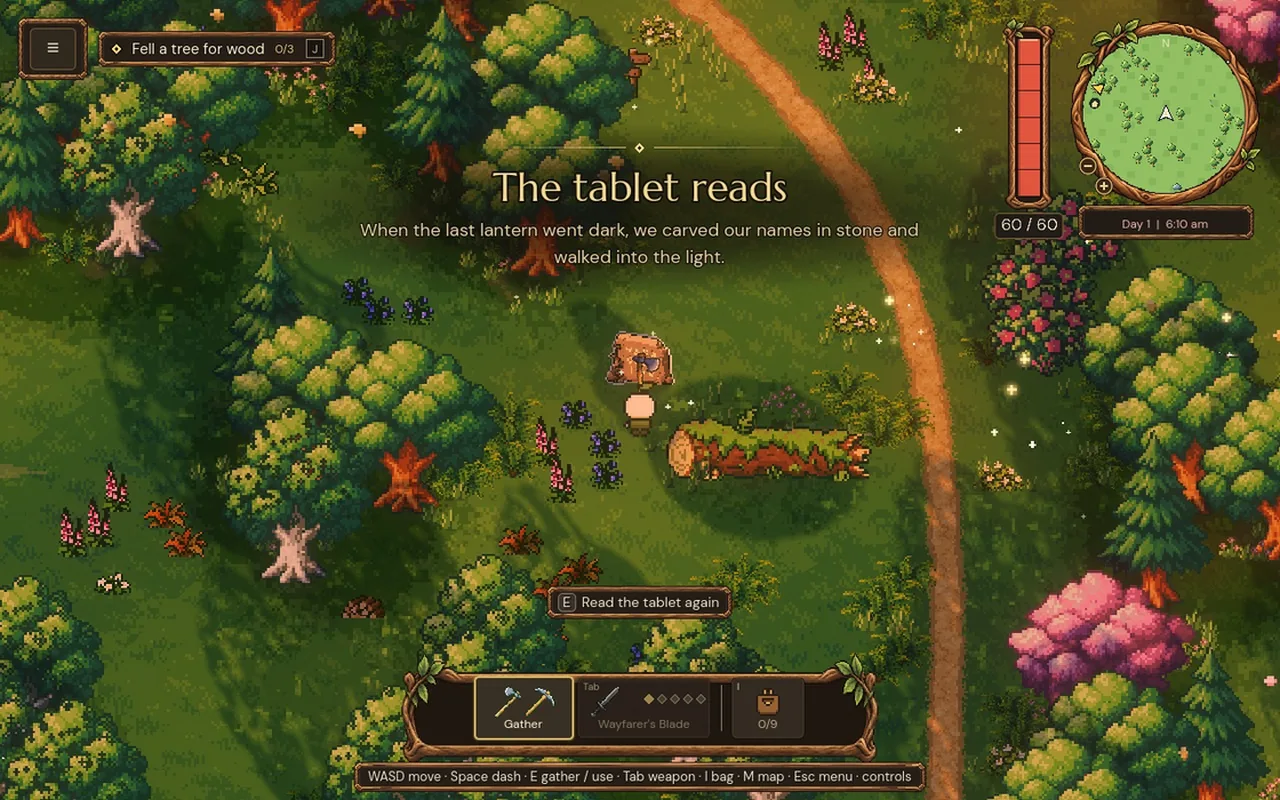
The clip at the top was filmed for this post: walking up to a rune tablet and reading it.
How do you tell a story without cutscenes?
Put the story where players already go, in pieces small enough to read without stopping, like a line carved on a stone or a name that appears when you enter a place. Write each piece so it makes sense on its own and in any order, and let the full picture form slowly. Players who read nothing should still have a complete game.
The short answer
How Mytheria tells its story:
- Every piece of story is a single sentence.
- There are 16 rune tablets in the world, 3 or 4 per region.
- Places show their name and a short line as you walk in.
- Each boss leaves one line about the people it guarded.
- Every boss has a title card with a name that hints at who it was.
- The morning after a keeper falls, the dawn adds a line.
- Any order works, and nobody has to read anything to finish the game.
One line, then back to playing
Every rune tablet holds exactly one sentence. Walk up and press E, and it appears at the top of the screen in large type while the game keeps running. One sentence is short enough that nobody skips it and long enough to carry an image: "When the last lantern went dark, we carved our names in stone and walked into the light."
Each line is written to stand alone. You might read a Copper Bloom tablet before any of the Woodland's, so no line depends on another. Together they add up to the story of the people who once lived on the island, the seals they made and the keepers they left behind.
Where the story lives
The tablets are only one of the places where the story lives:
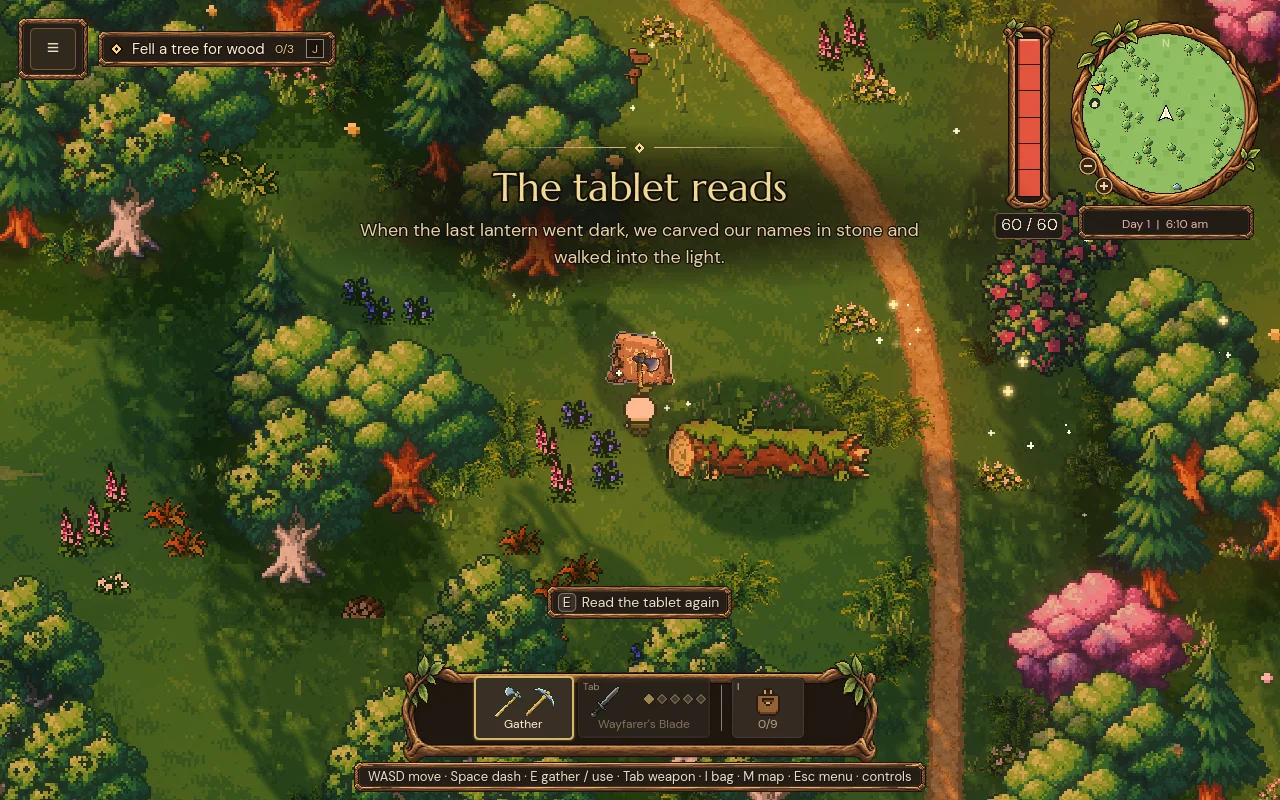
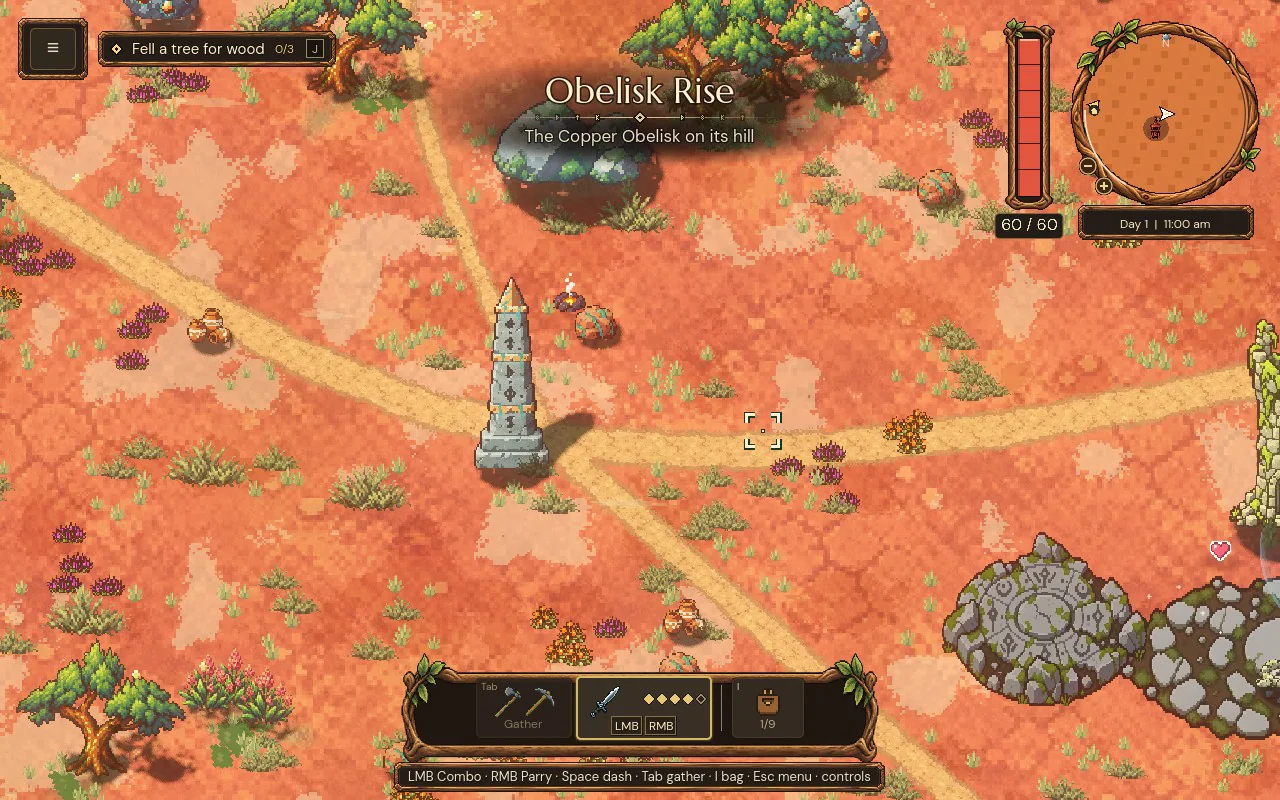
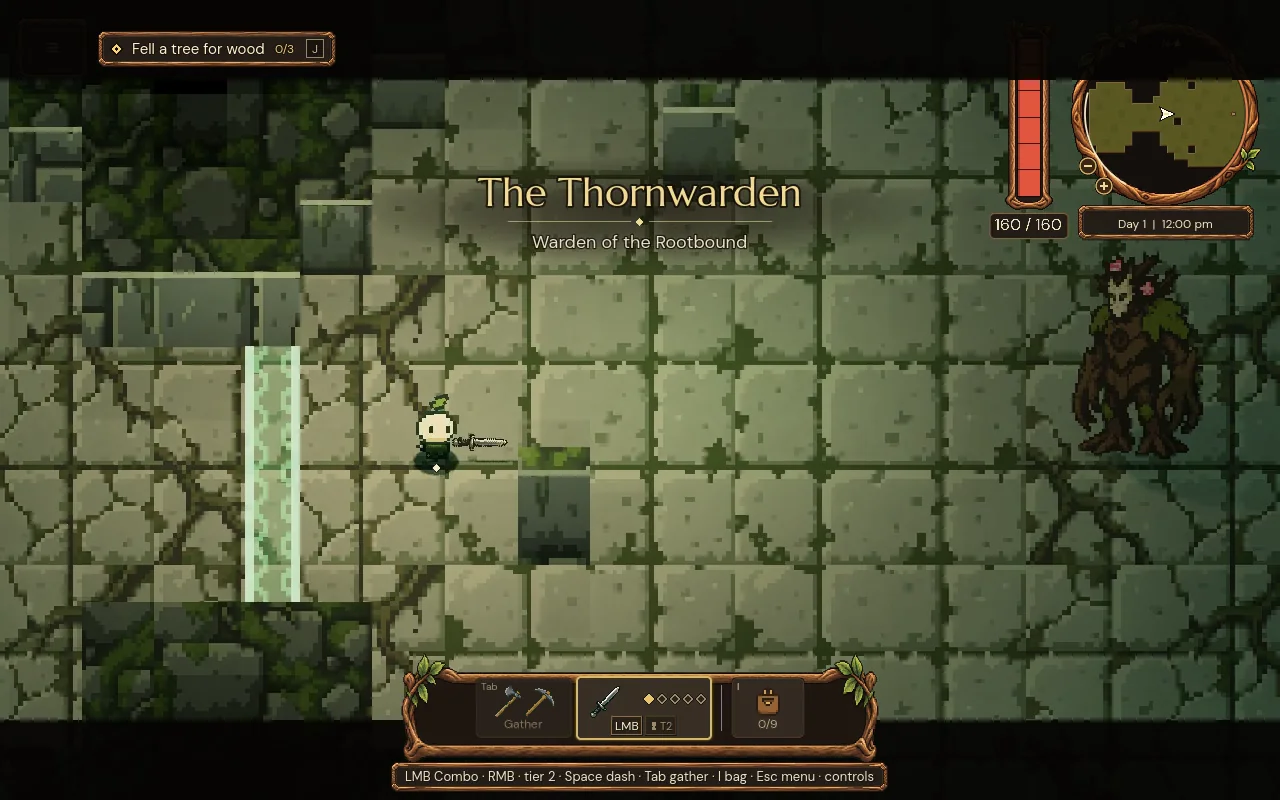
Step through the places, or use the arrow keys
A rune tablet: one line, shown while the game keeps running.
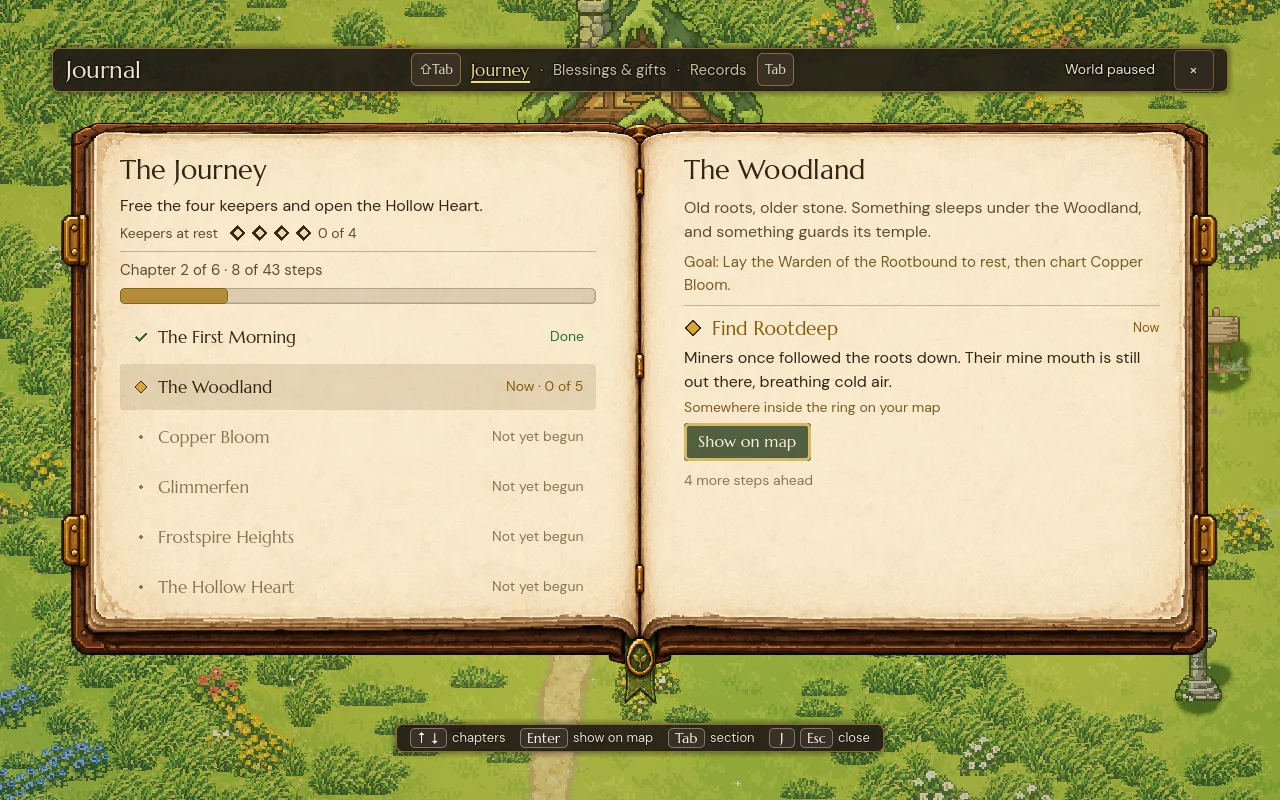
The quest journal carries a little story too; how it works is in quest design.
Let the boss tell the twist
The keepers you fight at the bottom of each temple weren't always monsters, and their title cards hint at it: the Warden of the Rootbound, the Keeper of the Last Fire. When a keeper falls, it leaves a memory: one line about the people it guarded. The Woodland's reads: "We crowned the Warden with roses so it would remember what it guarded: us, in spring." The fight is the same fight whether you read it or not, but if you do, you know who you just laid to rest. The fights themselves are in boss fight design.
The morning after, the dawn summary adds one line: "The Woodland breathes again: the Thornwarden rests."
Try reading in any order
These are the real tablets and memories of the first four regions. The Hollow Heart's are left out so they stay a surprise. Read the tablets in any order, lay a keeper to rest, and watch your lore log fill in the order you found things:
Loading the tablets…
Your lore log 0 of 16
Read the tablets in any order, then lay a keeper to rest
Place tablets so they're found
Each world places its tablets once, by fixed rules that put them where players will find them: at least 260 units apart, clear of roads by 30 units so they sit beside the way rather than on it, 160 units outside the home meadow and 140 from mine and temple entrances. They land somewhere different in every world, but always where a curious player walking the roads will pass.
Share the story in co-op
In co-op, the story belongs to the world. A tablet anyone reads goes into one shared lore log, in the order it was found. Nothing pauses while someone reads, so the friend who wants to keep fighting can.
A checklist for storytelling without cutscenes
- Never stop the game to tell the story.
- Keep every piece to a single sentence.
- Make each line stand alone, so any order works.
- Put lines where players already walk.
- Use names and titles to hint at what something used to be.
- Mark big moments with a single line.
- Keep a log of what's been found.
- Make sure a player who reads nothing still has a whole game.
Further reading
- Quest design: always give the player a next objectiveHow Mytheria's journal works: one objective on screen at a time, steps that complete from what you already did, search rings instead of exact pins.
- Boss fight design: five bosses and what each one testsHow we design Mytheria's boss fights: a sealed door, an intro, three phases with a breather between, patterns that test something new and a real fall.
- MytheriaPiece it together yourself: a pixel-art co-op adventure for one to four players.
Wishlist Mytheria
Mytheria is a pixel-art co-op adventure for one to four players, coming to Steam for Windows, macOS and Steam Deck. A wishlist is the best way to follow it and to help us.