How to make a rock break feel satisfying
How Mytheria makes breaking a rock feel good, frame by frame: a dust puff, a shadow that shrinks away, a tidy rubble pile and text that never overlaps.
On this page
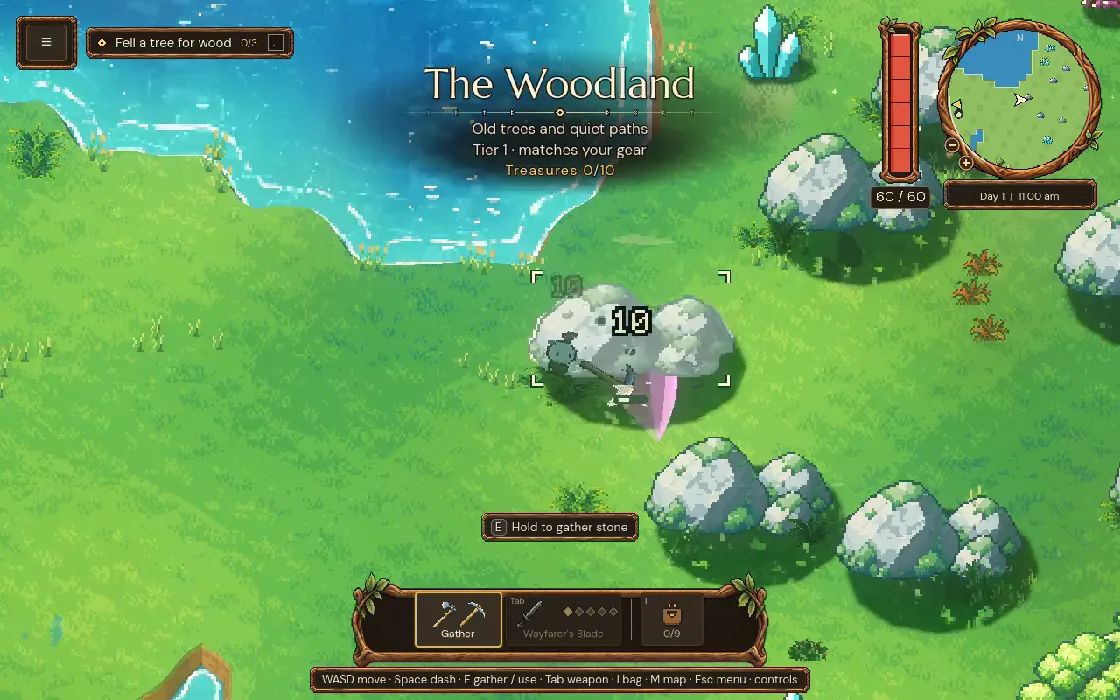
In a game about gathering, players break hundreds of rocks, so how a break looks and sounds is something they meet all day, as an irritation or as a small reward. In Mytheria, our pixel-art co-op game, the moment a rock gives way is built from a handful of short effects, each with a job, timed to the frame.
Everything below was filmed in the game for this post at 60 frames a second.
How do you make breaking things feel satisfying?
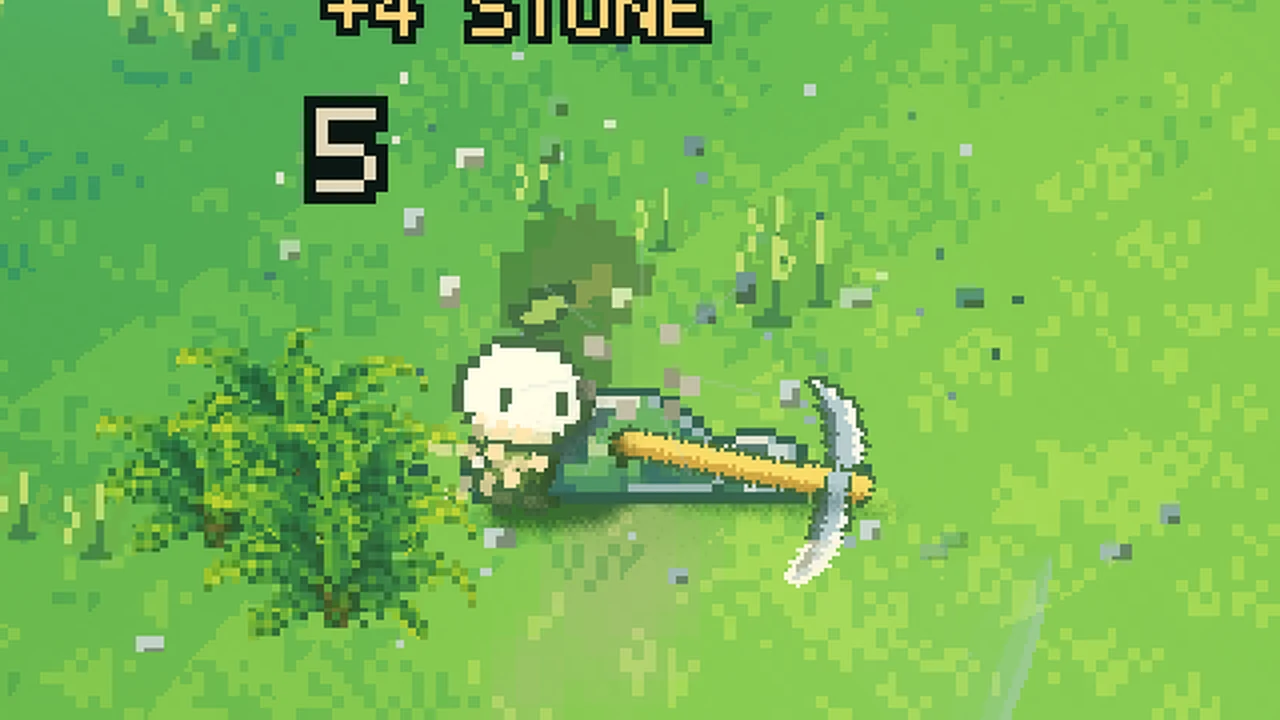
Give the final hit more than the others, then move cleanly to the reward. A burst of dust plays on the break, the object's shadow shrinks away with it, and a small pile stays behind. The drops then fly to the player with readable text. Every piece should be brief, with no glitches and no text piled on top of other text.
The short answer
How a rock break works in Mytheria:
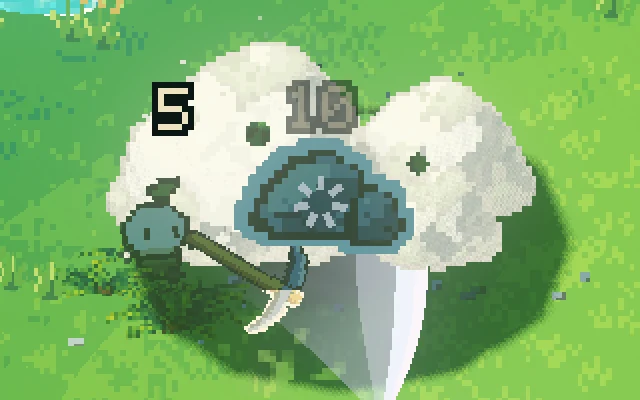
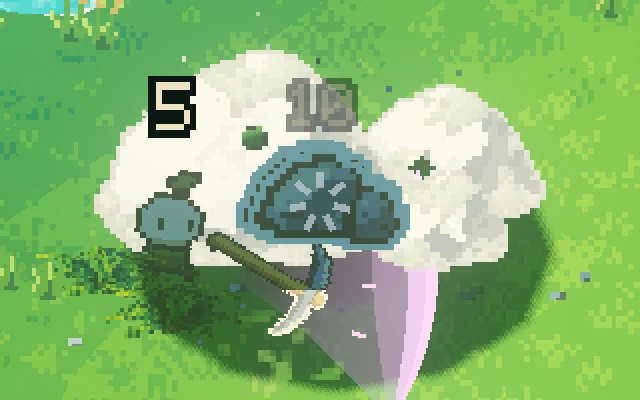
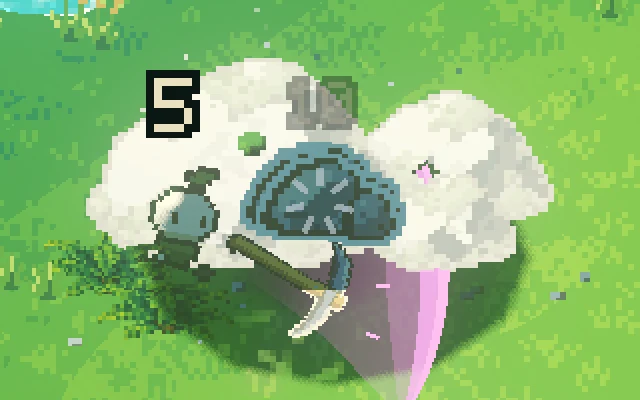
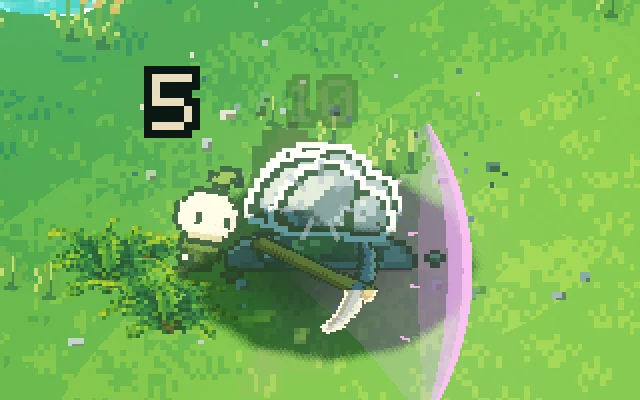
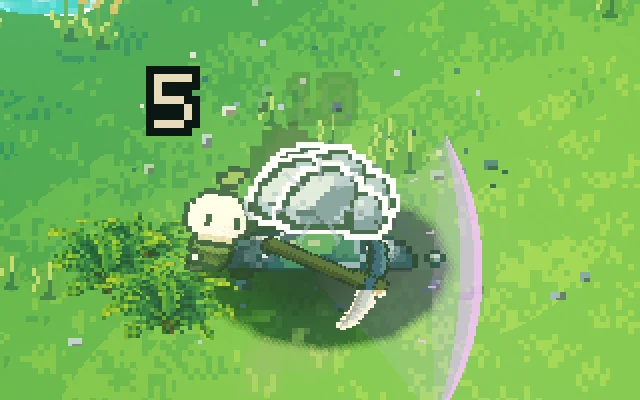
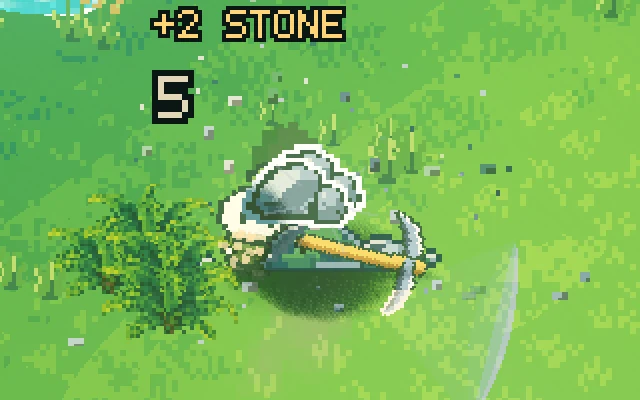
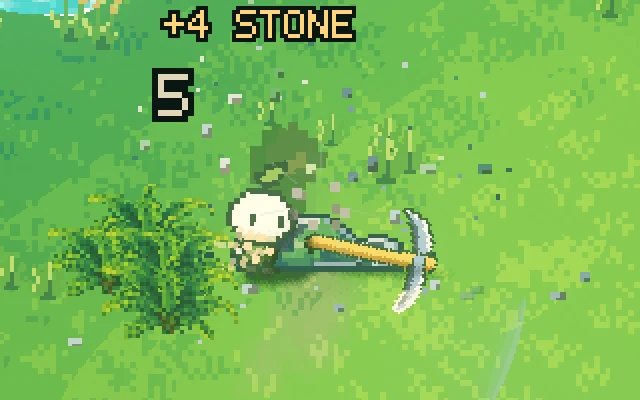
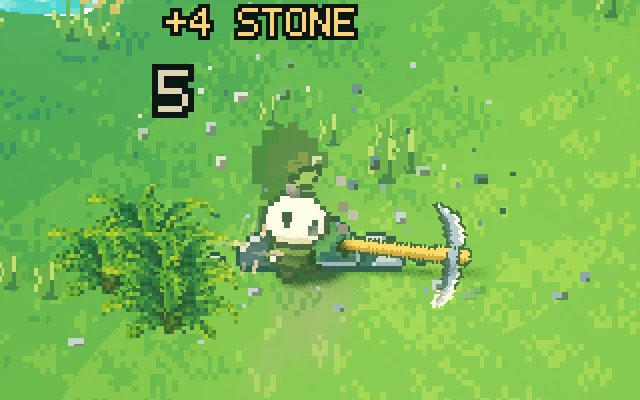
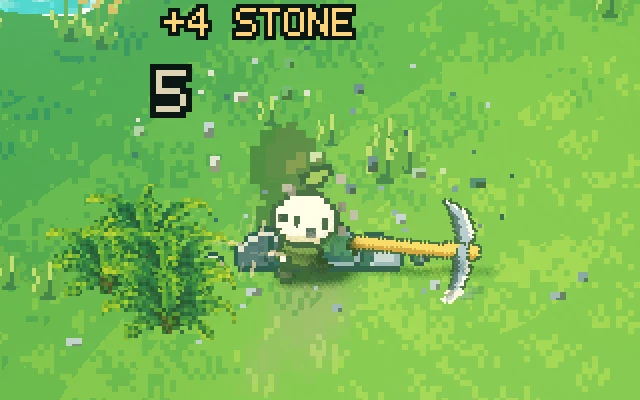
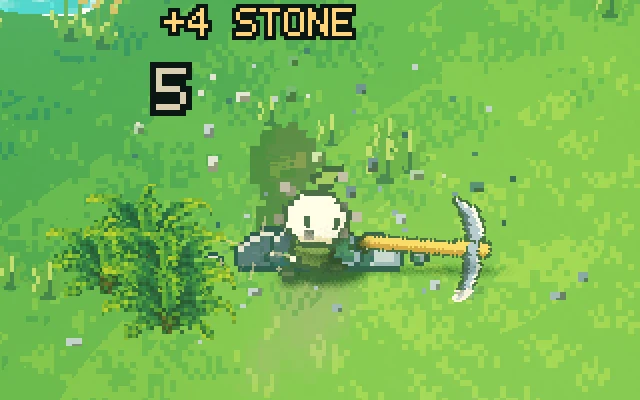
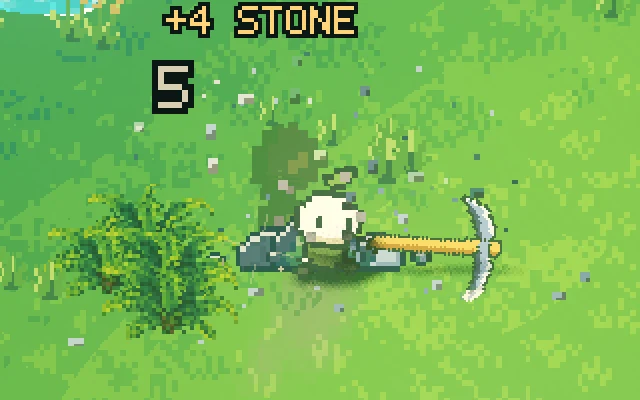
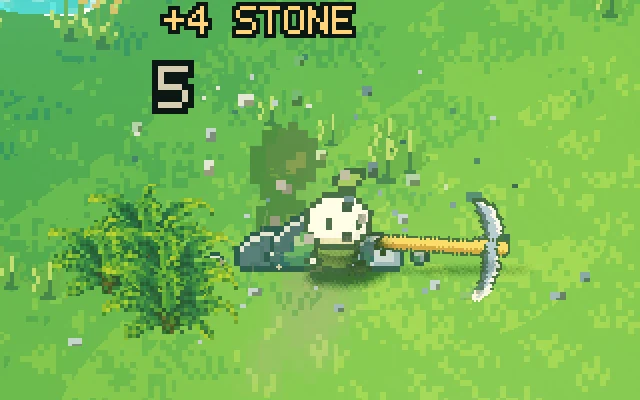
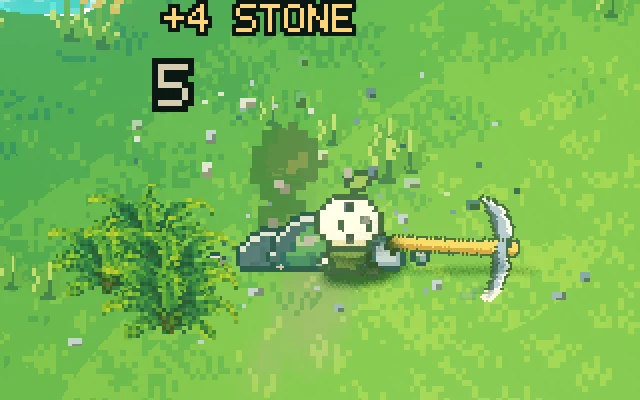
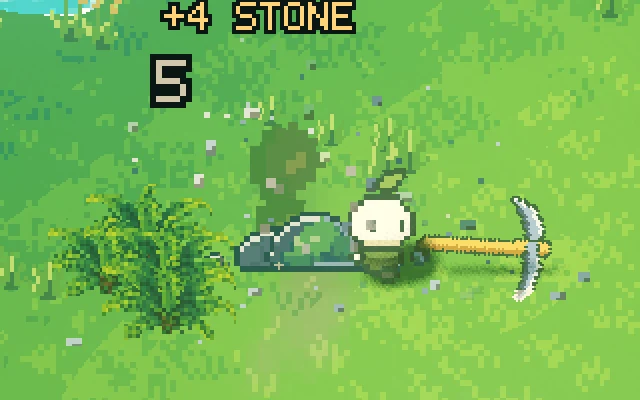
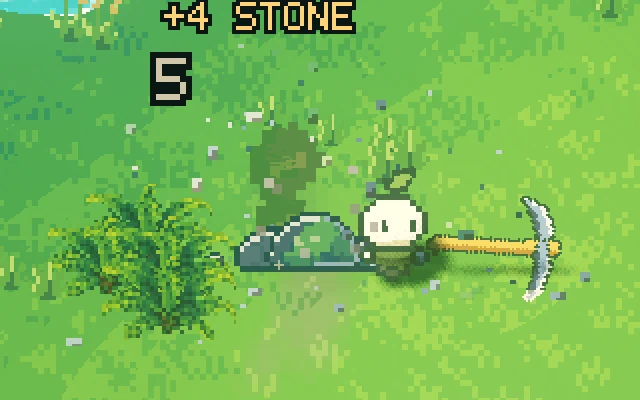
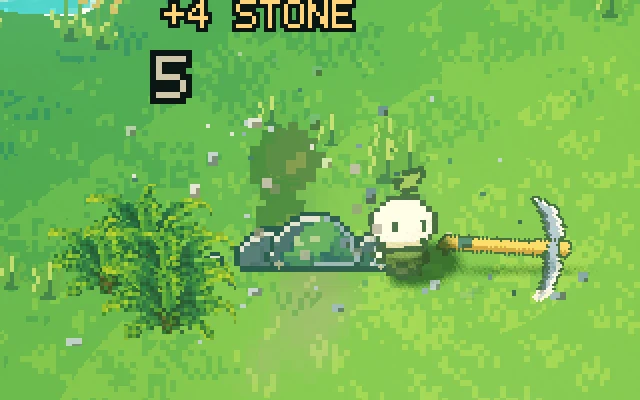
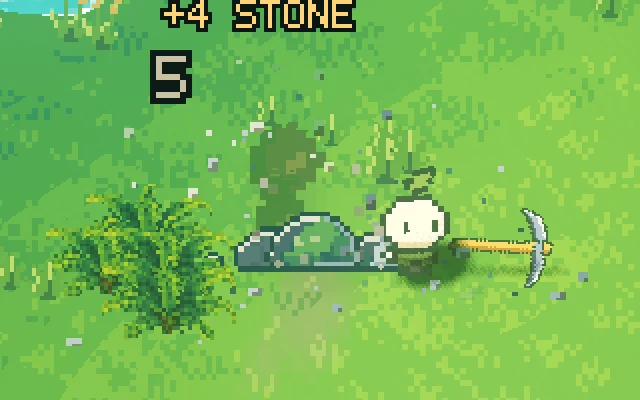
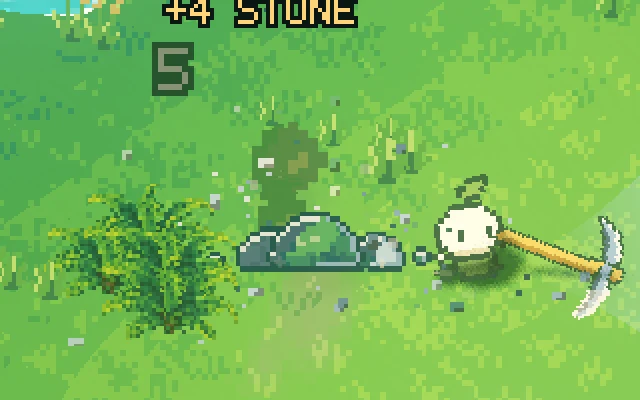
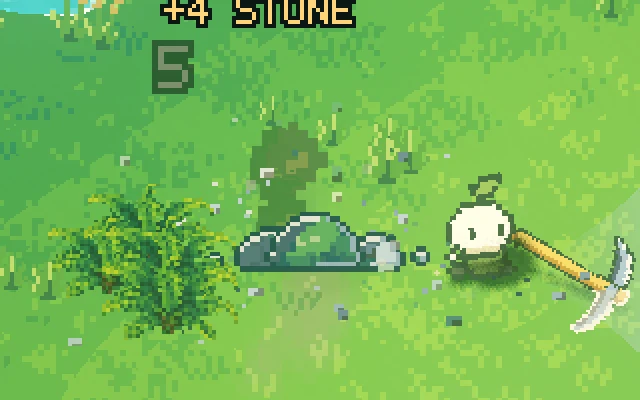
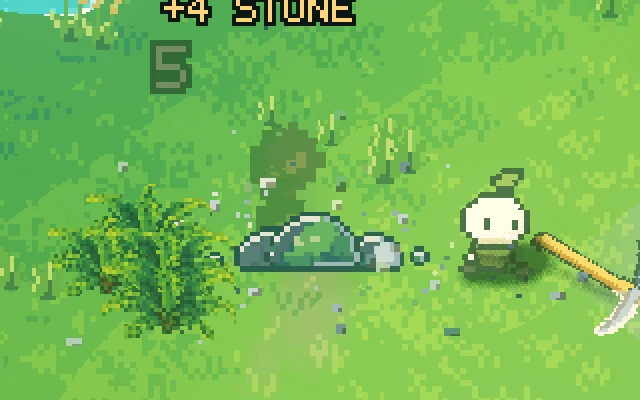
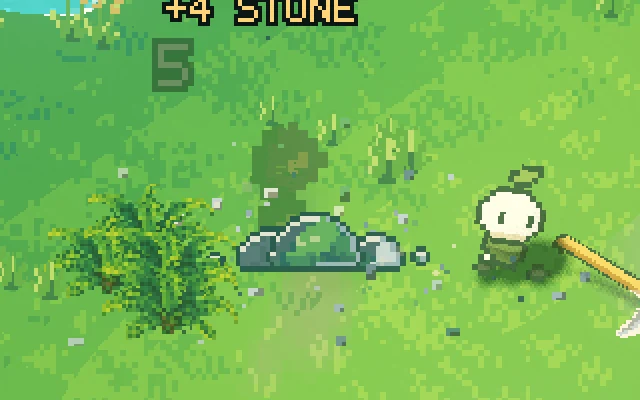
- A puff of dust plays on the breaking blow, for about three frames.
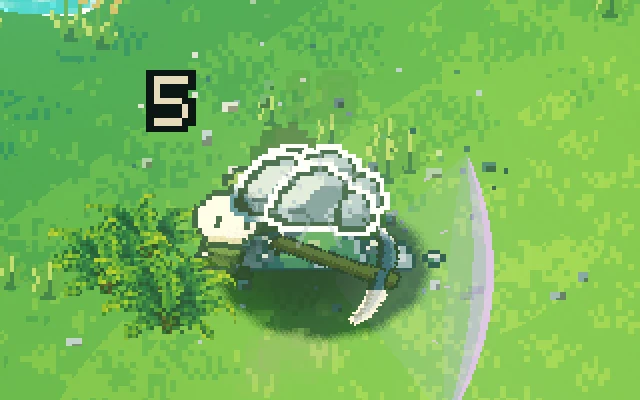
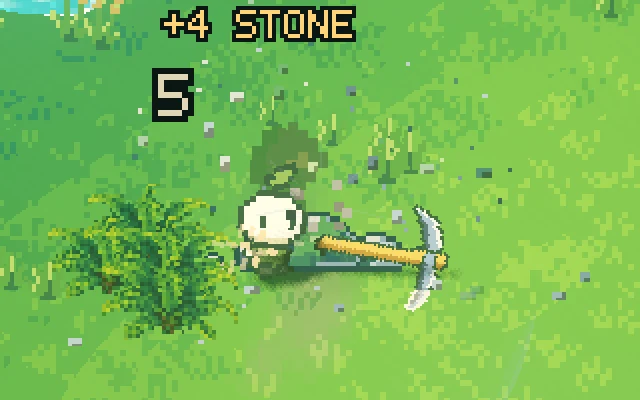
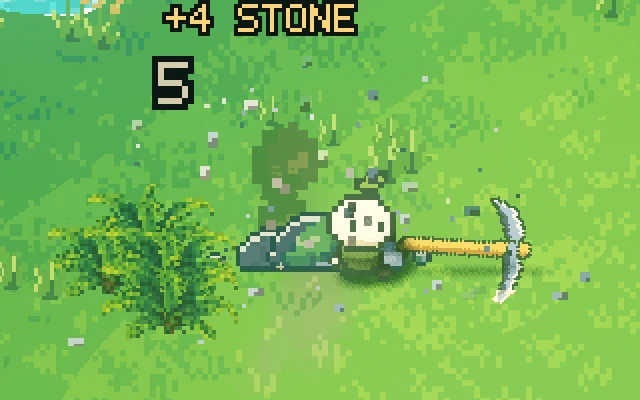
- The shadow shrinks into the ground over 0.2 seconds, height first.
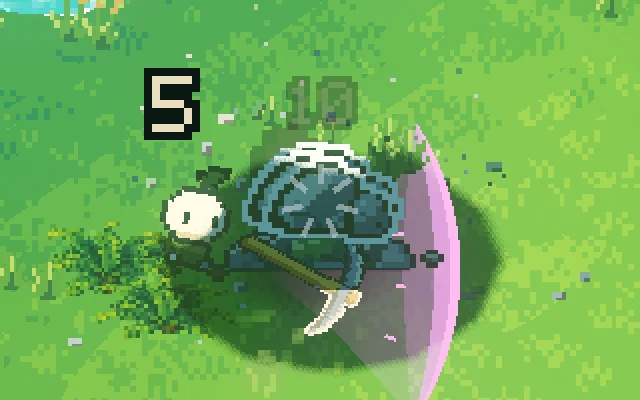
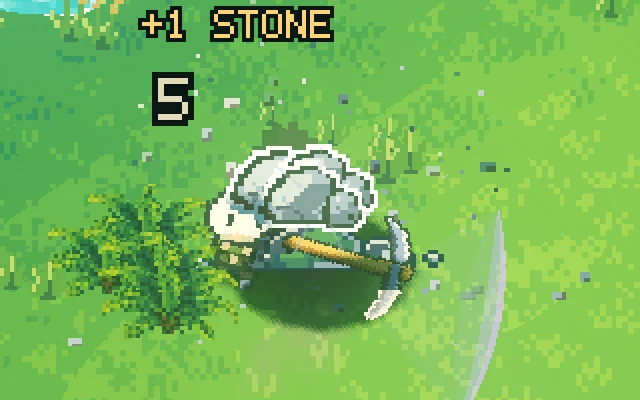
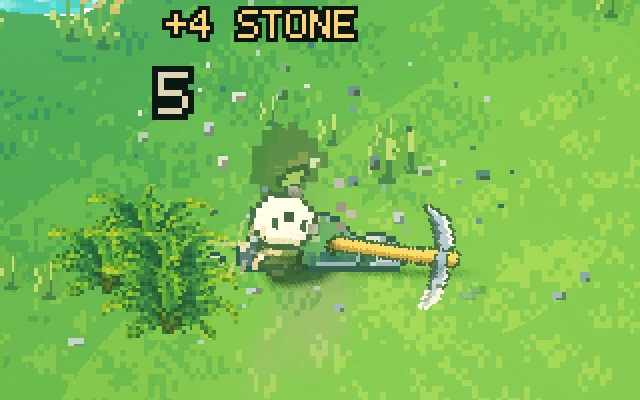
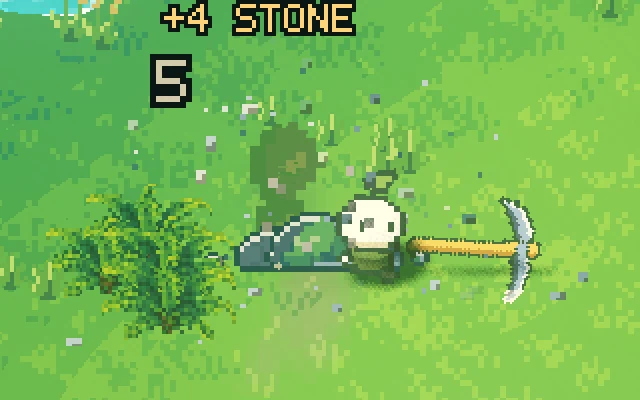
- A tidy pile of a few rounded lumps stays behind.
- The drops fly to you and land in your bag within about eight frames.
- The damage number and the "+4 STONE" line take separate lanes, so they never overlap.
- The rock's hit sound and the break sound play together on the final strike.
Frame by frame
How the swing finds the rock in the first place is in forgiving aim.
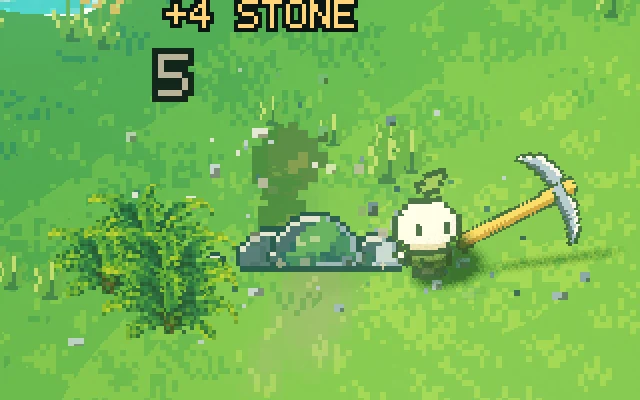
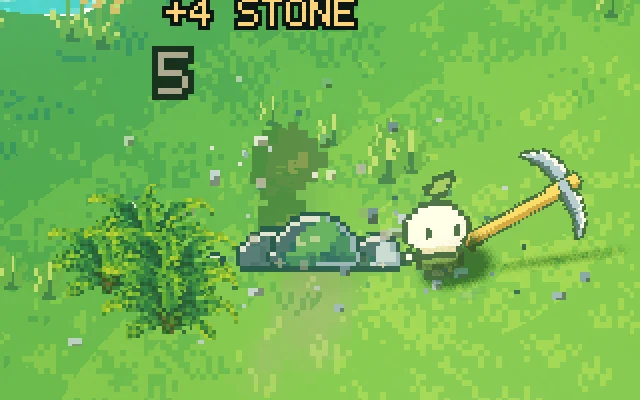
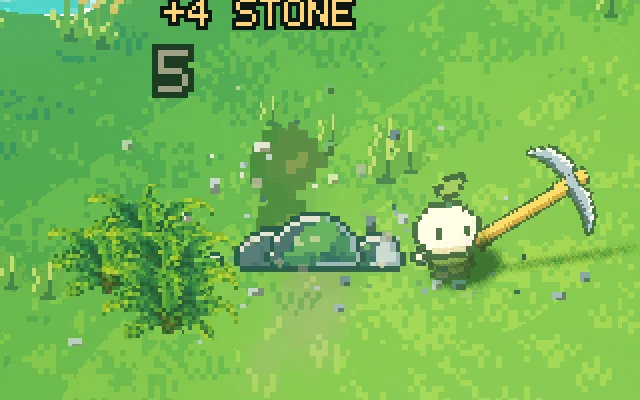
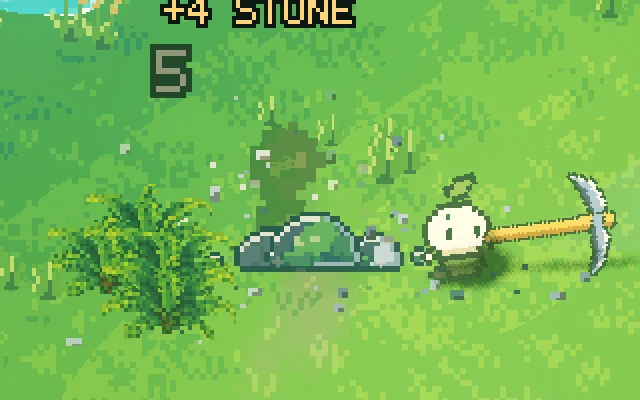
Step through the break. Frame 0 is the breaking blow; the bars show what each effect is doing on every frame:
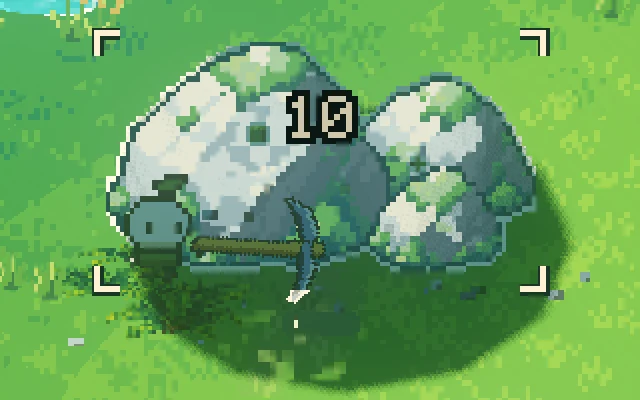
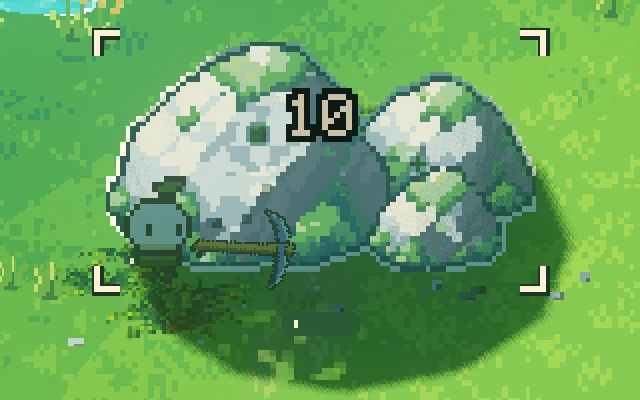
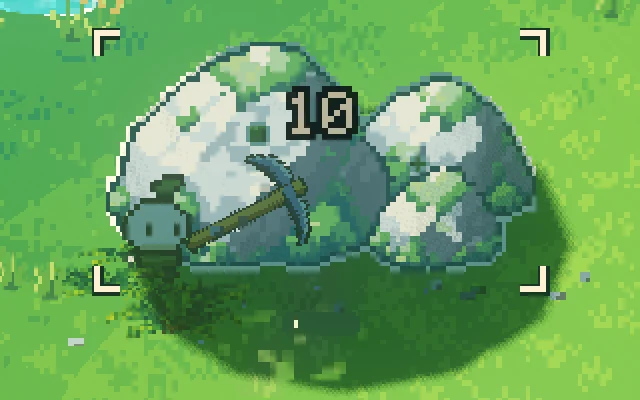
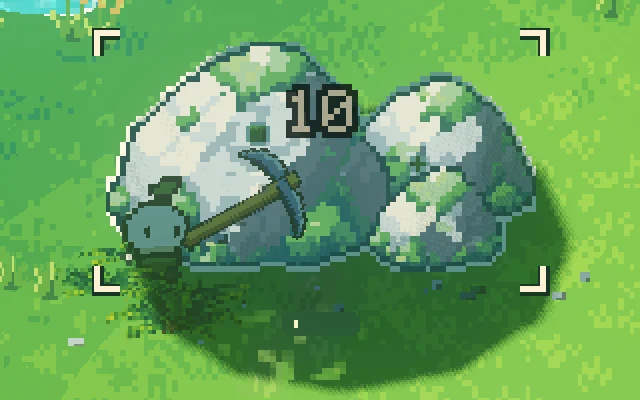
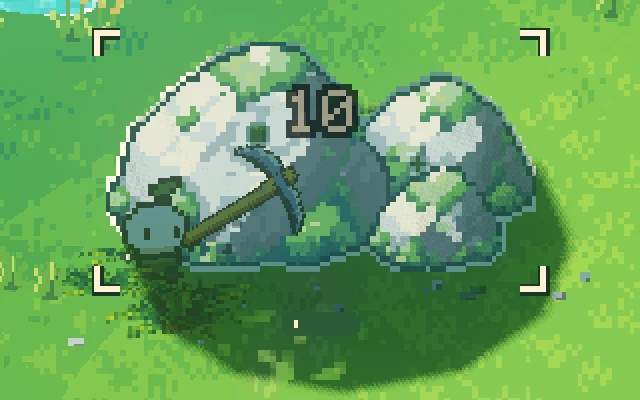
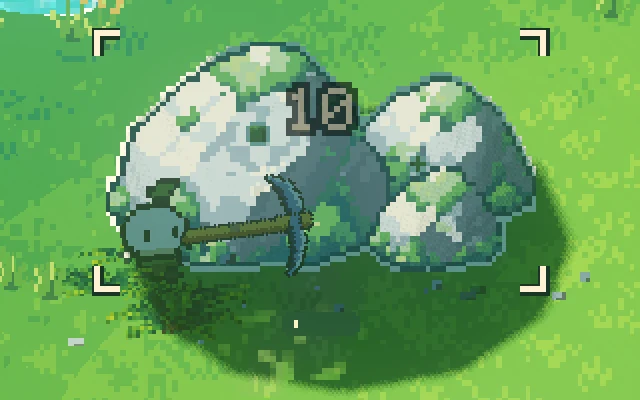
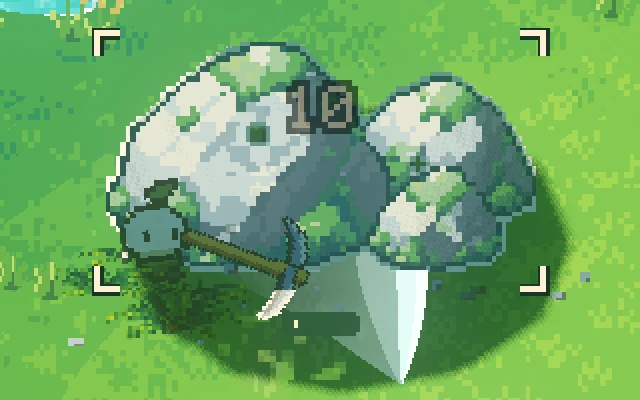
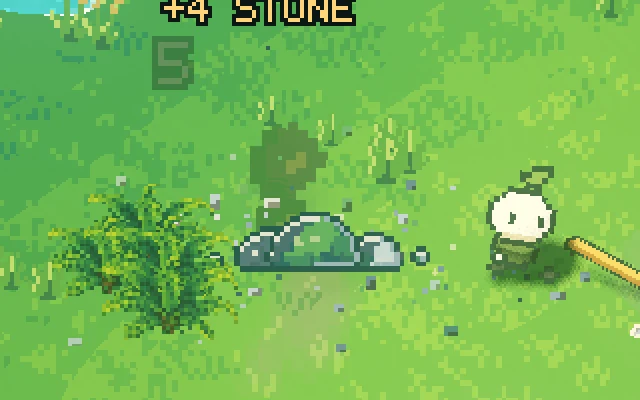
Contact
Drag along the timeline, or step through it with the buttons
And the same moment at a quarter of real speed:
Let the shadow leave with the rock
A tall rock casts a long shadow, and when it breaks, the shadow has to go somewhere. Removing it in one frame looks like a glitch, and leaving it in place leaves a dark stain where nothing stands. Mytheria freezes a copy of the rock's shadow at the break and collapses it into its base over 0.2 seconds: first the height, so the shadow retracts towards the rubble, then the width. The small soft shadow under the rock eases down to the size of the rubble pile. With Reduced motion on, the shadow simply goes.
Leave something behind
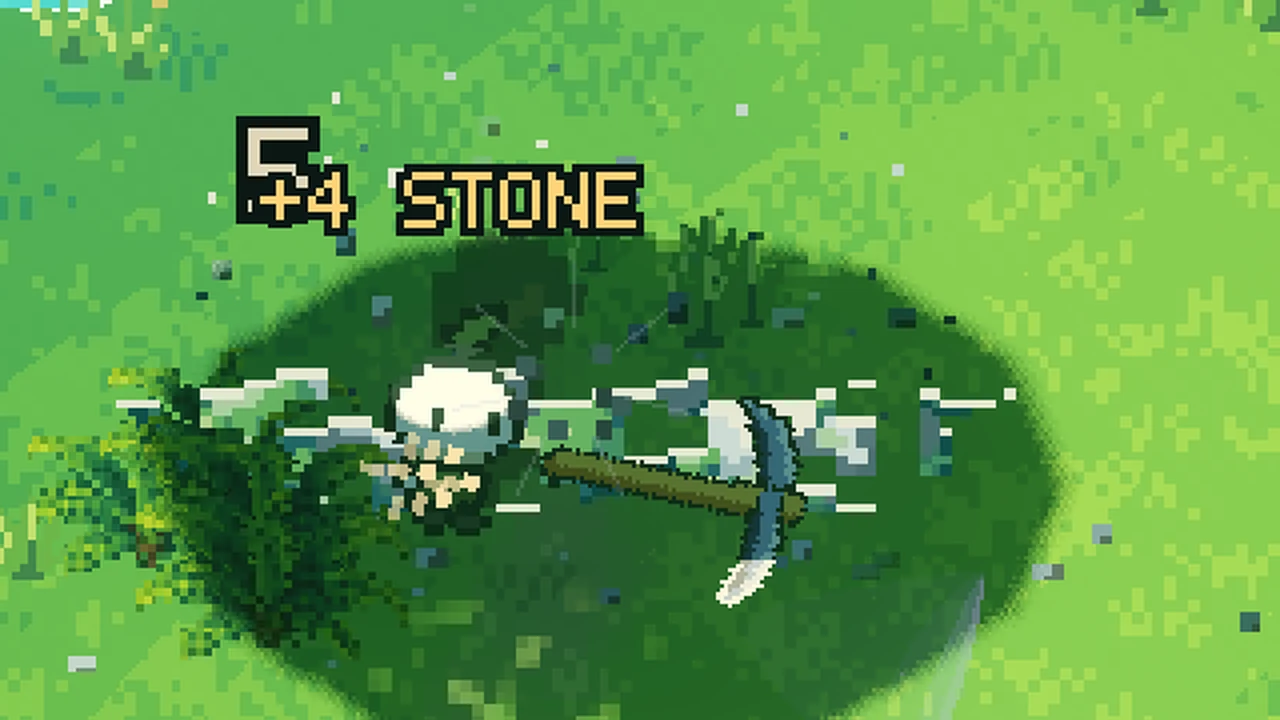
When a rock vanishes completely, the world feels weightless, so a broken rock leaves a rubble pile: three or four rounded lumps and a pebble, about half the width of the rock, textured from the rock's own pixels so moss and ore flecks carry over. It's low enough that it casts no shadow of its own, and a faint contact shadow under it keeps it on the ground. When the rock grows back, the full shadow returns.
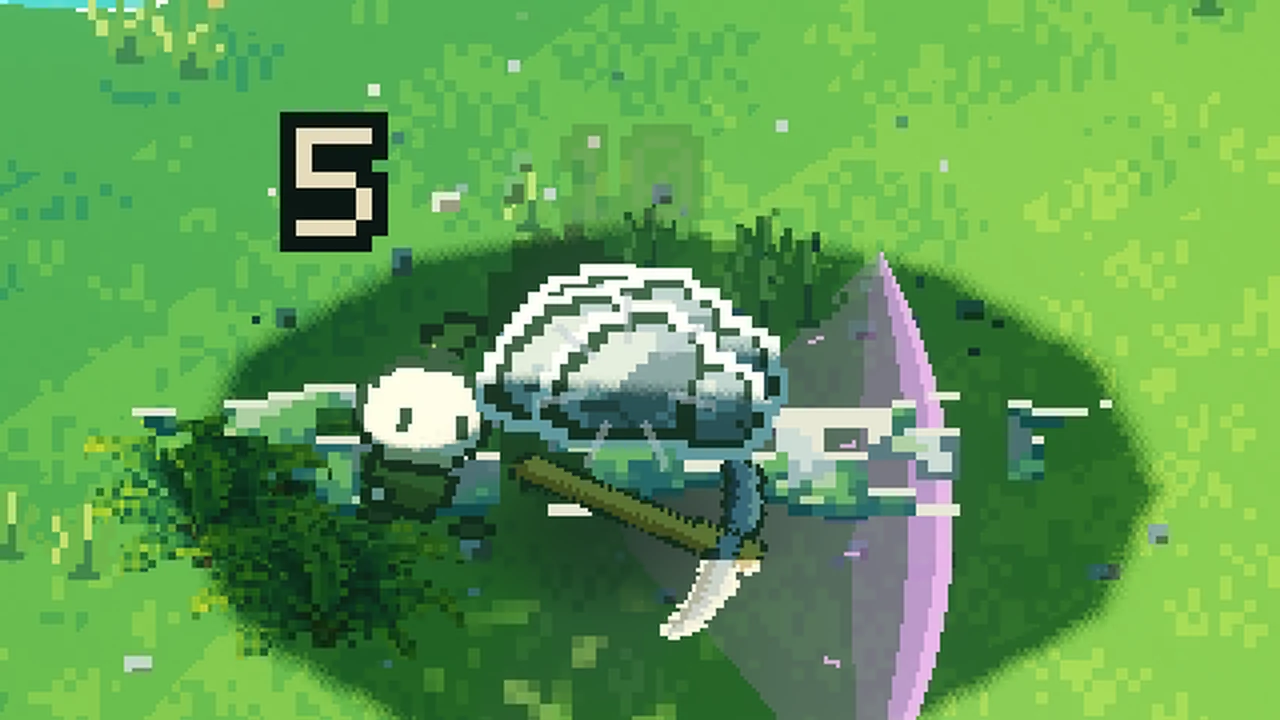
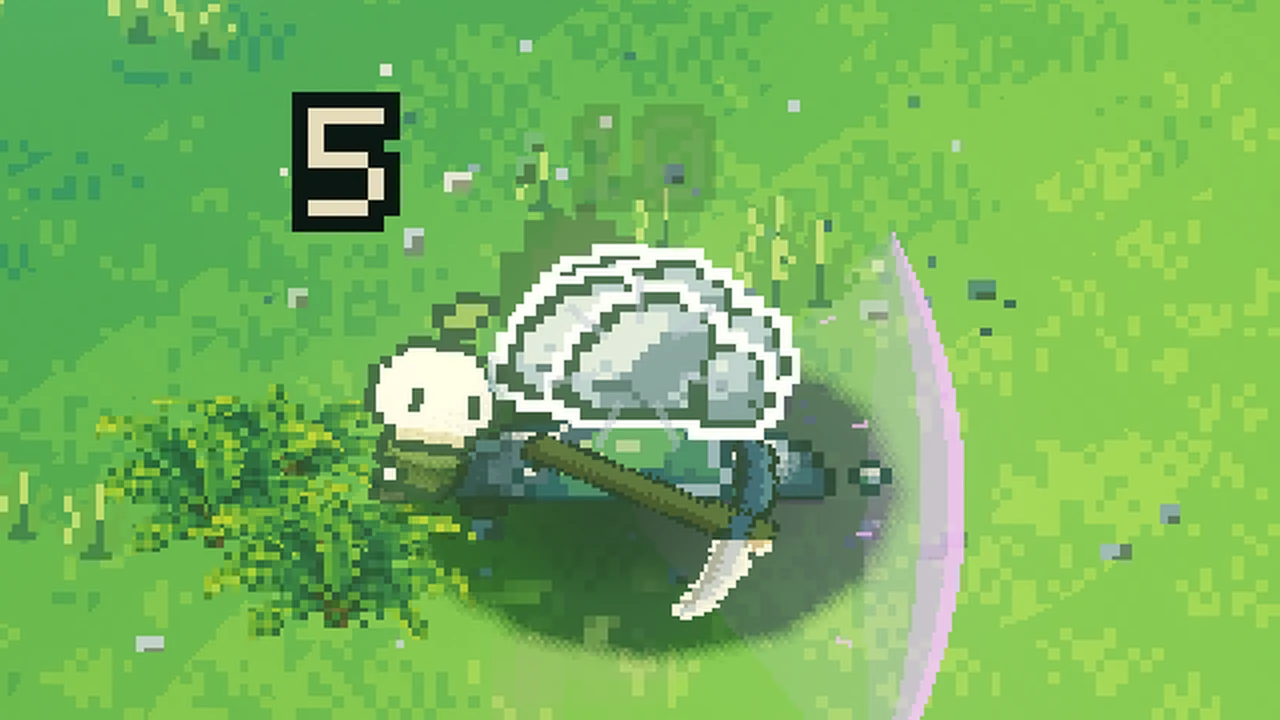
How the rubble is drawn matters. Cutting off the bottom of the rock and painting its new top edge light leaves thin, bright one-pixel slivers across the whole width, which read as scratches on the screen. Rounded lumps, each with a dark outline and lit from the upper left, read as stones. An automatic check rejects any rubble with slivers like that. Compare the same frame of the same break, cut the old way and drawn as lumps:
Compare the frames, or use the arrow keys
The rock's base cut off and its edge painted light: bright one-pixel slivers across the width, and the full shadow left on the ground.
How the stones then fly into the bag is covered in loot drops that feel good to pick up.
Keep the text apart
A break produces two pieces of text at almost the same moment: the damage number of the final blow, and a few frames later the "+1 STONE" line, counting up to "+4" as the drops arrive. The number rises 22 units a second and lives 0.6 seconds; the pickup line rises more slowly and lives longer. If each kind of text only avoided its own kind, the two would collide. In Mytheria every new piece of floating text checks where every other piece will be for the rest of its life, and takes the nearest lane that stays clear. More on the numbers themselves in damage numbers that read at a glance.
Don't drop the last sound
Every hit on a rock plays its stone hit sound, and the last one is easy to forget: if the breaking blow only plays the "break" sound, the final strike feels oddly hollow. Mytheria plays the rock's own hit and the break sound together on the final blow. The rest of the hit's feel, the flash, the stop and the shake, is covered in how to make combat feel good.
A checklist for a satisfying break
- Make the final blow bigger than the rest, briefly.
- Puff some dust, for a few frames only.
- Shrink the shadow away over a few frames.
- Leave a small, tidy pile behind.
- Draw rubble as rounded lumps, and check for slivers.
- Send drops to the player fast.
- Keep all floating text in separate lanes.
- Play the hit sound on the last blow too.
Further reading
- How to make combat feel goodHow we made combat feel good in our indie game Mytheria: hitstop, hit flash, knockback and screen shake, with real frame data you can try yourself.
- Damage numbers in games: why whole numbers read betterHow Mytheria draws floating damage numbers: whole numbers, one number that ticks up per target, colours by who's hurt, and lanes so hits never overlap.
- MytheriaBreak a few rocks yourself: a pixel-art co-op adventure for one to four players.
Wishlist Mytheria
Mytheria is a pixel-art co-op adventure for one to four players, coming to Steam for Windows, macOS and Steam Deck. A wishlist is the best way to follow it and to help us.