Client-side prediction
Client-side prediction moves the player's own character the moment they press a key, then checks the result against the host's answer when it arrives.
Also called prediction, server reconciliation, local prediction.
In an online game where the host decides everything, waiting for the host's answer before moving makes every press feel late: at 75 milliseconds each way, that's 150 milliseconds before you see yourself move. Prediction runs the same movement code on the player's own machine, so the character responds instantly, and the host's answer only confirms it.
What happens when the prediction is wrong?
The host's answer says which inputs it has used. The player's game jumps its copy back to the host's position, replays the inputs the host hasn't used yet, and carries on. When both ran the same code on the same inputs, nothing visible happens. When something happened on the host the player couldn't know about, the difference has to be corrected, ideally without a visible snap.
Prediction in Mytheria
A guest sends what they press 30 times a second, never their position. When a correction is needed, the difference shrinks by 14 percent every step, about 110 milliseconds to fade, so you glide to the right spot. Only a difference of more than 56 pixels, effectively a teleport, snaps at once.
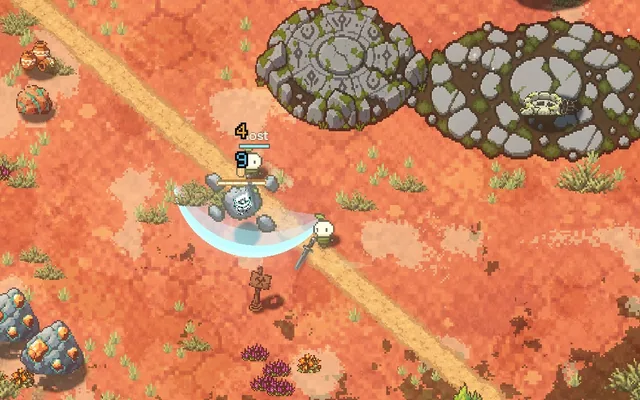 The full post, with clips and demos How co-op multiplayer works in Godot: host, prediction and lag